

Engineering and health researchers at the University of Waterloo have developed a radar and artificial intelligence (AI) system that can monitor multiple people walking in busy hospitals and long-term care facilities to identify possible health issues.
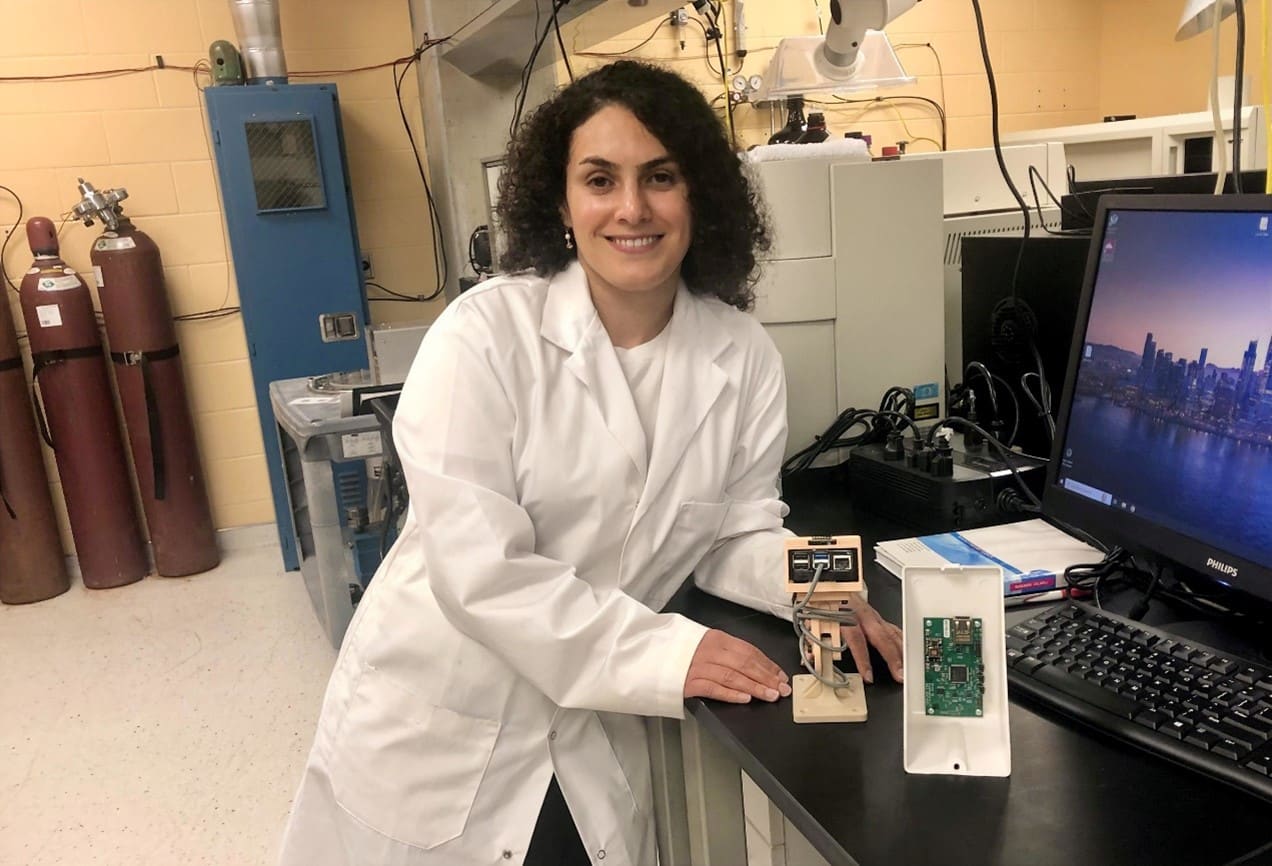
The new technology — housed in a wall-mounted device about the size of a deck of cards — uses AI software and radar hardware to accurately measure how fast each person is walking.
“Walking speed is often called a functional vital sign because even subtle declines can be an early warning of health problems,” said Dr. Hajar Abedi, a former postdoctoral researcher in electrical and computer engineering at Waterloo.
“We see our system as a new kind of vital sign monitor, one that can silently watch for gradual mobility decline the way a thermometer watches for fever.”
The device sends out low-power radio waves that bounce off people, return to a sensor and are converted into heatmaps showing movement.
Sophisticated AI algorithms then separate “blobs” on the heatmaps into individual people, screen out extraneous signals and track the trajectory of each person over time to calculate their walking speed.
The technology was tested with older adults who had been put on 14 days of strict bedrest — mimicking the physical decline experienced during a serious illness or a long-duration space flight — as part of a unique study involving the Canadian Space Agency.
“By capturing their recovery with our new radar-AI system, we demonstrated how this technology can detect even subtle changes in walking speed, a powerful early marker of frailty and functional decline,” Abedi said.
The ability to track walking speed builds on previous work by the Waterloo research team to detect falls using radar, which operates in any light, preserves privacy and doesn’t require subjects to wear any devices.
Abedi is now chief scientist of a startup company, GoldSentinel, which has commercialized the technology into a platform called ElephasCare for use in hospitals and long-term care facilities.
“Our vision is to build an invisible safety net through a radar-AI system that quietly monitors over residents day and night, tracking not only walking speed but the full spectrum of mobility and behavioural changes to alert caregivers long before a crisis occurs,” she said.
The Waterloo research team also included Dr. George Shaker, a professor of electrical and computer engineering, Dr. Richard Hughson, a professor emeritus of kinesiology and health sciences, Dr. Plinio Morita, a professor of public health sciences, and Dr. Jennifer Boger and Dr. Alexander Wong, both professors of systems design engineering.
A paper on their work, Non-contact, non-visual, multi-person hallway gait monitoring, appeared in Scientific Reports.