
.)
By Barbara Greenwood Dufour
The Canadian Mental Health Association estimates that, each year, one in five Canadians will experience a mental health issue. These conditions are often debilitating and can be associated with considerable personal, societal, and economic costs. However, there is a wide range of therapies available to treat mental health conditions.
In addition to conventional treatments, such as medication and western psychotherapy, there are also several alternative treatment options for mental health conditions. These include natural health products — such as, vitamin, mineral, and herbal supplements — as well as alternative therapies such as reiki and acupuncture. Some see these alternative treatment methods as potential alternatives to conventional medicine or, at least, as a way to augment the effectiveness of conventional approaches when used along with them.
CADTH — an independent agency that finds, assesses, and summarizes the research on drugs and medical devices — recently conducted a search for abstracts of the best, most recent evidence on alternative health care providers and natural health products for managing mental health conditions. CADTH then reviewed the outcomes and findings that are detailed in the abstracts of these studies and produced a Summary of Abstracts report on what was found. Although it isn’t a comprehensive review of the studies and CADTH hasn’t critically appraised the evidence, it gives us a broad sense of what the evidence is saying on the topic.
CADTH found systematic reviews on several alternative treatments for mental health conditions, the majority of which suggest that it’s still unclear if they truly work. There isn’t a lot of scientific evidence supporting these practices despite the fact that many have been in use for centuries.
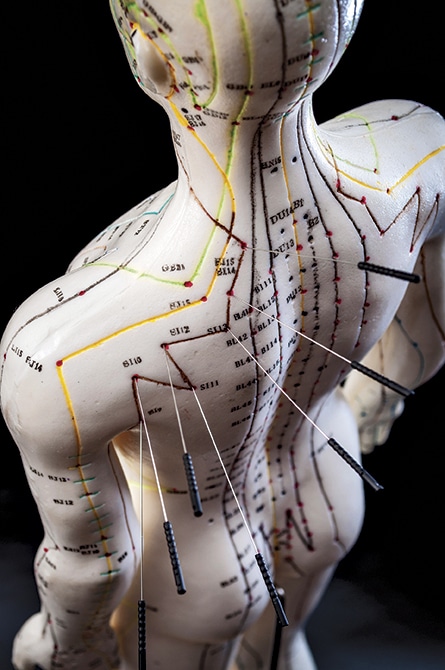
For example, CADTH identified reviews of acupuncture for the treatment of depression. Originating in China, acupuncture is a treatment with a long history of use for a wide range of ailments. But the evidence is unclear and conflicting. One review concludes that whether acupuncture is effective either on its own or if it enhances the effectiveness of pharmaceutical treatments is unknown given that the evidence is of such low quality. Similarly, a review of the evidence on acupuncture for post-partum depression is inconclusive. Only one review, which focused on depression and depression-related insomnia, comes to a stronger conclusion, finding no difference in the improvement of symptoms between individuals treated with acupuncture and those treated with Western medicine, adding that combining acupuncture with Western medicine seems to be more effective than treatment with Western medicine alone.
CADTH uncovered several reviews on a variety of natural health products for mental health conditions. For example, five systematic reviews were found on St. John’s wort for treating depression — this herbal remedy has been used for hundreds of years to treat mental health issues. Three reviews look specifically at its use to treat mild to moderate depression, and two are focused on major depressive disorder. All the reviews appear to suggest that St. John’s wort might be effective for improving depressive symptoms and may even be as effective as antidepressant medications. However, the two reviews that focus specifically the use of St. John’s wort to treat major depressive disorder note that the available evidence tends to be of low quality.
Another ancient, plant-based treatment that has been studied is saffron. CADTH identified four studies that suggest it may have some effectiveness for depression. A review of herbal medicines for treating depression and another specifically on saffron for mild-to-moderate depression both found saffron to be as beneficial as antidepressant medications. Similarly two additional studies focused on major depressive disorder found that the clinical trials conducted so far suggest that saffron may improve symptoms in patients with this specific form of depression.
The research on alternative treatments and natural health products for depression, and for other mental health conditions, looks encouraging. But it’s generally conflicting and unclear. In addition, although CADTH’s high-level review of abstracts didn’t assess the level of bias in the studies it identified, in their abstracts, several of the systematic review authors noted that the individual studies had a high level of bias. Furthermore, despite the fact that many people seek out alternative treatments believing that they have a lower risk of side effects compared with conventional treatments, the evidence to support this is unclear. For all these reasons, these are therapies that should be used with caution.
If you’d like to read CADTH’s full Summary of Abstracts on alternative practitioners and treatments for mental health conditions, it’s freely available at www.cadth.ca/reports. To learn more about CADTH, visit www.cadth.ca, follow us on Twitter: @CADTH_ACMTS, or talk to our Liaison Officer in your region: www.cadth.ca/contact-us/liaison-officers.
Barbara Greenwood Dufour is a Knowledge Mobilization Officer.