

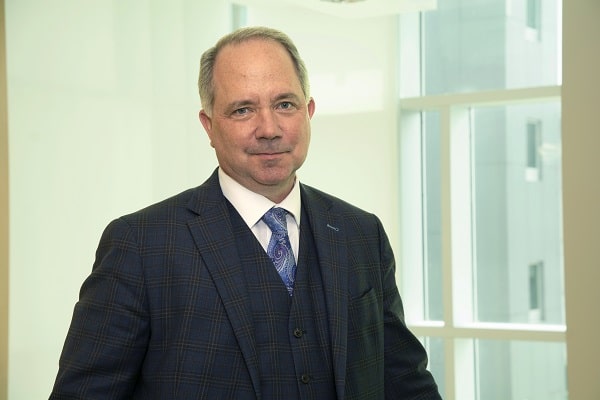
By: Roy Butler, PhD
For decades we have been preparing for the wave of aging baby boomers expected to flood our health care system. We have built expertise in geriatrics and pathways to care for older adults that focus on their complex needs while enhancing quality of life. But now that the wave is upon us – at a time of great strain on our system – are we ready for the tsunami of patients yet to come?
According to the Canadian Institute for Health Information, Canada’s senior population has more than tripled in the last 40 years, a trajectory that continues. Today, one in five people is over age 65, with that number expected to grow to one in four over the next 25 years. Those over 75, a group at higher risk for frailty, is growing at an even faster pace.
Older adults with frailty are those over the age of 65 who are experiencing increased vulnerability from a combination of physical, cognitive, social and emotional factors that influence their ability to withstand life stressors. These individuals have an increased risk of hospitalization, longer hospital stays, hospital readmission, emergency department visits and in-hospital death. A staggering 340,000 seniors at risk of frailty are admitted to hospital each year.
St. Joseph’s Health Care London (St. Joseph’s) has been the regional lead in Southwestern Ontario for geriatric programs and services for more than 30 years. In 2017, with the support of Ontario Health West, St. Joseph’s set out under the Southwest Frail Senior Strategy to improve outcomes and experiences for older adults with frailty and their caregivers through creation of an integrated health care system in Southwestern Ontario. Through this work, and in consultation with patients, caregivers, providers and community partners, we learned key lessons in enhancing the quality of care for older adults, providing equitable access to services and improving the patient and caregiver experience. As a system, key steps are required now if we are to meet the looming challenges ahead. We must…
Break down silos between sectors to help ensure that older adults with frailty receive the care they need—close to home—when they need it. This includes streamlining navigation through cross-sectoral partnerships, community-driven coordinated intake and access points and better mechanisms for information sharing.
Bring together providers from different health care organizations and sectors to wrap care around patients as a collective. This requires clarifying roles to understand which organization best serves which type of patient and creating formal communication opportunities, such as shared rounds.
Improve information access and knowledge sharing for older adults, caregivers and health care providers. Stakeholders need to be able to find reliable information to navigate the system and make sense of work happening both provincially and regionally.
Advocate for government investment beyond long-term care. Investment is also needed in suitable housing options for older adults such as assisted living and improved home care and community services so individuals can continue to safely live at home.
Address the ageism that exists in our system and society. In a recent St. Joseph’s DocTalks Podcast episode, Dr. Sheri-Lynn Kane, Chief of Geriatric Medicine at St. Joseph’s identifies a common misperception that, “…anyone with white hair and a blue gown is going to be a drain on the health care system.” The opposite is actually true, she says. Older adults are extremely resilient and resourceful and have a lifetime of experience, perspective, time and talent we should tap into and harness.
So, perhaps the question is not, “Are we ready?” It is, “Are we doing the work necessary to get there?” I’m optimistic that, together, we can face the wave and continue to provide older adults with the respect, care and compassion they deserve.
Roy Butler, PhD is the President and CEO at St. Joseph’s Health Care London.