

By Michael Oreskovich
Depression and feelings of isolation are common among seniors with dementia, but meaningful social interactions can make a big difference. By bringing together patients and enthusiastic kindergarten students, Runnymede Healthcare Centre provides seniors under its care with an opportunity to connect with young children. The benefits are undeniable – quality of life for patients has been transformed, earning Runnymede recognition among peers. This further cements the hospital’s reputation for prioritizing patient-centred care as it looks ahead to expanding its role as a Community Healthcare Hub with long-term care services.
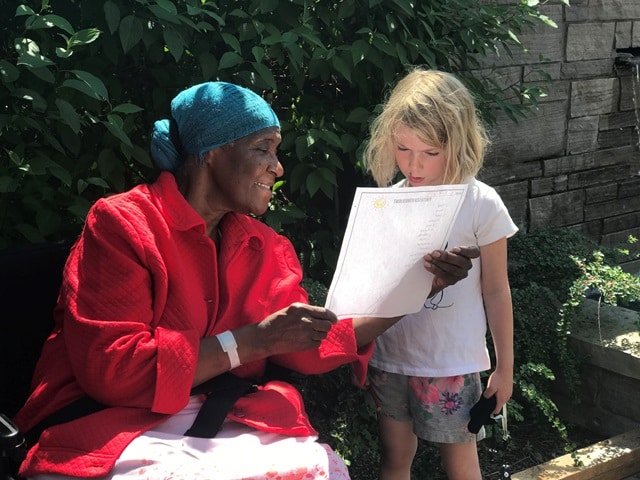
The intergenerational program brings kindergarteners in from nearby Swansea Public School to participate in shared activities and projects with Runnymede’s senior citizen patients. Held on site at the hospital once per month throughout the school year, program activities are designed to encourage as much interaction as possible between the generations and include games, crafts and group fitness.
The excitement the students bring when they visit Runnymede is palpable and has an extremely positive impact on the patient experience, boosting patients’ engagement when they interact. Since the same students participate over the course of an entire school year, strong bonds often form over time, providing the seniors with a unique opportunity to share their knowledge and experience with a younger age group.
“The children really enjoy being able to visit and help some of our patients with activities, and our patients love the energy the children bring to the program,” says Sarah King, Runnymede’s manager of activation and volunteer services. “The kids are great because they’re so accepting of everyone just the way they are – we definitely see that our patients let their guard down with the children, and their personalities open right up.”
Through surveys and direct observation, the hospital staff continue to ensure the intergenerational program is targeted to the patients’ needs and interests. Overall satisfaction among participating patients remains high and includes positive changes in their overall mood. Hospital staff also noted that patients had a higher level of involvement and engagement in other hospital activities once they participated in the program, and became more socially engaged with peers and staff overall. These impressive outcomes led to the intergenerational program receiving recognition at a May 2018 best practices conference for rehab organizations in the Greater Toronto Area.
It’s not just the patients who benefit. The program provides children with an opportunity to develop a greater appreciation for senior citizens and helps them become comfortable around people with different types of disabilities. According to Rebecca Forte, teacher at Swansea Public School, the kids are learning important lessons about empathy. “They understand that patients may not always be able to communicate in familiar ways, but they are still involved and understand what is happening,” she said. “Many kids today don’t live close to grandparents like kids of earlier generations; having a chance to interact with older people in the community is so valuable for them.”
As a result of the hospital’s drive to constantly improve, the program was recently expanded to enhance the benefit that patients receive. Recently, the hospital took the ambitious step of broadening the program to a full week. The kindergarten curriculum was integrated into the goals and objectives of selected activation programs, and patients and students shared lunch together every day.
The intergenerational program’s expansion was a resounding success, and is part of an ongoing trend at Runnymede, where continuous quality improvement and delivering an outstanding patient experience are top priorities. “Fostering socialization and promoting our patients’ mental and emotional health is crucial to our patients achieving overall health and wellness, and the intergenerational program does just that and we’re very proud of it,” said King. “The evidence shows we’re achieving our intended results and we plan to develop the program further so it can continue to be a rich and rewarding experience for everyone involved.”
Michael Oreskovich is a Communications Specialist at Runnymede Healthcare Centre.