

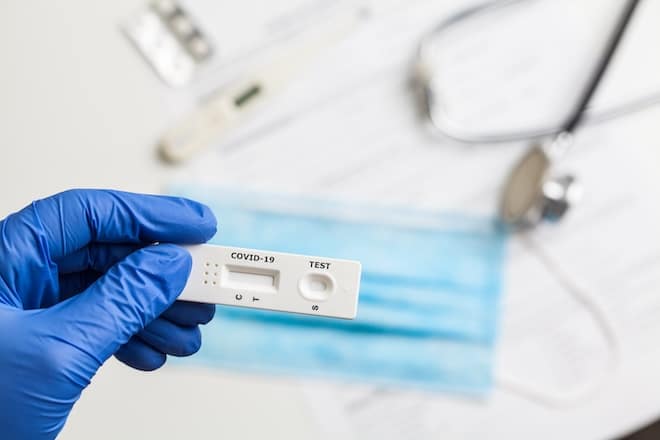
A new study indicates that COVID-19 self-tests effectively identify non-infected individuals as well people with high viral loads and high infectiousness.
The COVID-19 pandemic marked the first time in the history of pandemics where self-testing was used as an essential component of a widespread public infection control and prevention strategy. Nearly four years into the pandemic, a study sheds a light on the diagnostic accuracy and impact of the SARS-CoV-2 antigen-detection rapid diagnostic tests used for COVID-19 self-testing. The study, led by Dr. Nitika Pant Pai at the Research Institute of the McGill University Health Centre (RI-MUHC) and published this week in the journal PLOS Global Public Health, suggests that the value of self-testing lies in the rapid identification and isolation of highly contagious individuals and that some aspects of the self-testing strategy can improve self-test performance, like clear instructions for use and result interpretation, and adequate pretest training.
“Overall, the results of our study are impressive. Evidence shows that self-testing is an effective tool to prevent transmission of SARS-COV-2 and suggests that it helped control outbreaks and limit transmission, and allowed work to continue during the pandemic. In the future, public health agencies and governments should not hesitate to invest in accurate, rapid, portable and perhaps digitally enhanced self-testing strategies, like apps, websites and video-based instructions, not only for respiratory viruses but also for non-respiratory pathogens,” says Dr. Pant Pai, senior author of the study, Scientist in the Infectious Diseases and Immunity in Global Health Program at the Centre for Outcomes Research and Evaluation of the RI-MUHC and Associate Professor of Medicine at McGill University.
The study consists of a living systematic review, i.e., it will be updated in one year, and a meta-analysis of 70 studies – with pooled data from 25 countries – that have evaluated the diagnostic accuracy of rapid tests for COVID-19. The authors analyzed the data according to a number of different variables, such as sampling site, symptomatic status, supervised/unsupervised self-testing method and the presence/absence of digital support. The researchers also examined the feasibility, acceptability and impact of self-testing, as well as people’s preferences and motivations, and key facilitators and barriers to the adoption of the self-testing strategy.
An effective, feasible and acceptable preventive strategy
According to the study findings, rapid tests for COVID-19 have a very high specificity (the capacity to detect negative cases/healthy individuals), with a true negative proportion consistently above 98 per cent. Most false negative test results reported in the study occurred when the person was less contagious and outside the
transmissibility window.
Test sensitivity (the ability to detect positive cases/infected individuals) differed from subgroup to subgroup, depending on the variable studied, and was consistently low in asymptomatic individuals (the test missed picking infection in them) but high in symptomatic (the test did not miss picking up infection).
Highest sensitivities, or highest true positive proportions, were observed within groups of people who:
• conducted their test in supervised settings (86.7%),
• were symptomatic (73.9%)
• used mid-turbinate nasal specimens, i.e., sample taken just from further up the nostrils inside the nose (77.8%)
• used digital support strategies like apps, websites and video-based instructions to improve test conduct (70.%).
Further, the researchers found that users had a strong preference for COVID self-tests and were willing to use them, but their interest in repeated or daily use was low.
Most importantly, impact outcomes were many: self-testing strategies not only led to fewer school closures and workday savings for essential workers, they also prevented further transmission of infection amongst healthcare workers, facilitated the continuation of work at health laboratory sites and allowed social activities to continue with a lower risk of infection. These findings highlight their significant
public health impact.
Finally, the authors highlight that pre-training sessions, detailed self-test instructions in layman language and special testing kits designed for low-literacy, rural, peri-urban and senior populations could further improve self-test performance and uptake by such populations.
“Equitable access to COVID-19 self-testing will empower individuals and dismantle barriers, paving the way to a healthier and more inclusive society. The high impact of rapid, point-of-care, digitally supported self-tests in the COVID-19 pandemic highlights the need for increased research in such innovative diagnostic approaches,” says Apoorva Anand, first author of the study and trainee of Dr. Pant Pai at the RI-MUHC.
“COVID self-tests have helped democratize the access to self-testing and normalize the conversation about their use in homes, workplaces, offices and gatherings. Self-testing strategy is now here to stay, not just during pandemics, but as a strategy to control other infectious and non-infectious diseases and conditions. We must provide high-quality self-tests to maintain public confidence in the self-testing process and encourage individuals and communities to use them proactively for their own benefit,” adds Dr. Pant Pai, who is recognized as a global diagnostic expert on self-tests and point-of-care testing technologies.
The study Self-tests for COVID-19: What is the evidence? A living systematic review and meta-analysis (2020–2023) was co-authored by Apoorva Anand, Fiorella Vialard, Aliasgar Esmail, Faiz Ahmad Khan, Patrick O’Byrne, Jean-Pierre Routy, Keertan Dheda and Nitika Pant Pai.