

By Elizabeth Garel
Triage nurses are typically the first clinician that people see when they arrive at an emergency department (ED). These nurses must be able to assess and act quickly, and have excellent communication and observational skills. They also need thorough knowledge and understanding of the Canadian Triage Acuity Scale (CTAS).
Using CTAS,. But to calculate a CTAS score, triage nurses must consider thousands of possible combinations of the 169 presenting complaints and more than 400 modifiers that refine the severity of the patient’s vital signs and symptoms.
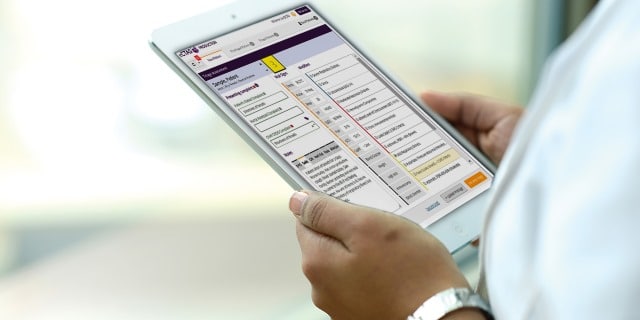
In September 2016, Hospital News reported that an electronic version of CTAS (eCTAS) would launch to improve emergency room triage accuracy for better patient care in Ontario. eCTAS is a decision-support tool that recommends a triage score based on information that nurses enter into the system, in alignment with the CTAS guidelines.
Developed by CCO (which, in time, will be Ontario Health), eCTAS has expanded across Ontario and shown a proven improvement in triage consistency. As of August 2019, 107 hospitals in Ontario are using the nurse-designed eCTAS system. As a result, 85 per cent of all patients in Ontario EDs are triaged with this innovative electronic tool.
“eCTAS has become a welcome and valuable electronic decision-support tool for use by Ontario’s highly educated and experienced triage nurses,” says Janice L. Spivey, a board member of the Emergency Nurses Association of Ontario.
Post-implementation audits confirm the program is supporting triage nurses in making accurate decisions in the assignment of the CTAS score for emergency patients. Research showed a 17 per cent improvement in triage accuracy for hospitals using eCTAS, effecting approximately one in six patients with minimal impact to triage time. Improved accuracy means fewer patients are under-triaged, improving patient safety in EDs across Ontario. The research findings will be published in an upcoming issue of the American College of Emergency Physicians journal, Annals of Emergency Medicine.
The electronic tool was designed with input from a 90-member working group of triage nurses and ED educators and administrators. Based on their design inputs, eCTAS displays all the information needed by triage nurses on a single screen.
“This is an easy-to-use, one-stop shop solution that meets the needs of frontline professionals. In a single view, they can triage, document assessments, enter vital signs and get the right CTAS score for their patients,” says Joy McCarron, Clinical Lead for eCTAS.
The program is supported by key national and provincial partners, including the Canadian Association of Emergency Physicians and the CTAS National Working Group. McCarron emphasizes that the CTAS National Working Group is responsible for determining the content of the guidelines. “CCO can’t change the modifiers or the way the scores are developed, but we can share insights with the CTAS National Working Group for future enhancements,” she says.
The eCTAS database now contains more than 4 million patient visits, making it the largest triage database of its kind in Canada. The robust dataset allows CCO to evaluate and monitor for trends and identify areas for improvement. For example, triage nurses may flag through eCTAS that modifiers are missing for certain conditions. CCO would then share this information with the CTAS National Working Group to consider when updating the guidelines. Hospitals can also use their local data to identify educational needs (e.g., if there is consistently high overrides of recommended CTAS scores).
Another key feature of eCTAS is a visual alert that conveys updates about infection risks from around the world.
“This feature is so important, as infection risks can travel quickly from anywhere in the world to Canada,” says McCarron. She gives a recent example involving a new antibiotic-resistant strain of typhoid from Pakistan. Within two hours of receiving the information about the risk from Public Health Ontario, CCO had embedded the update in eCTAS. If a triage nurse entered “Pakistan” in the travel history field, an alert appeared on the screen along with instructions on how to control the risk.
“It is exciting to see this program grow,” says McCarron. “Now other provinces are looking at eCTAS and exploring how they can emulate the program to improve the safety and consistency of triage across Canada.”
Elizabeth Garel is a Communications Advisor at Cancer Care Ontario.