

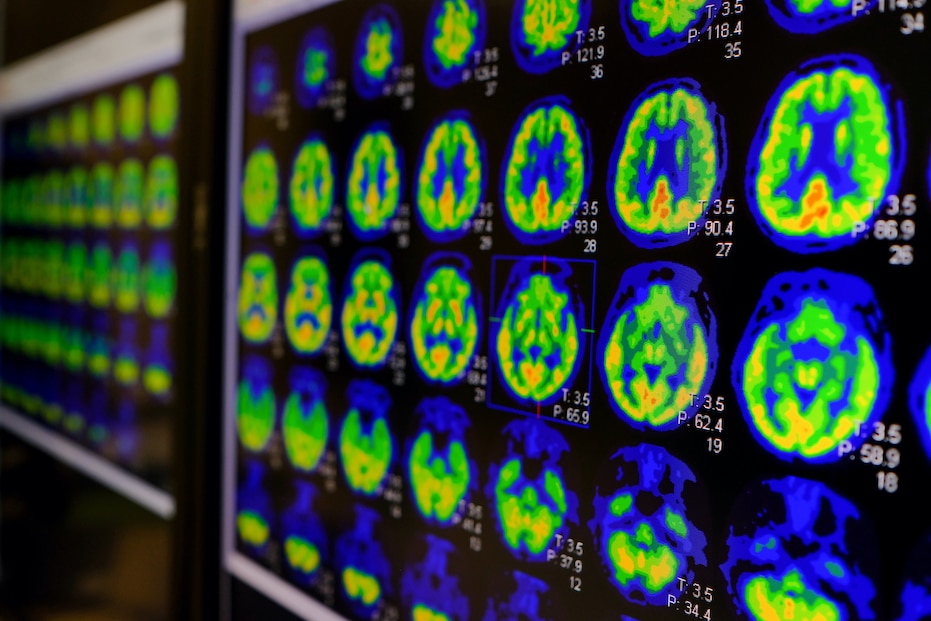
A new study led by Holland Bloorview Kids Rehabilitation Hospital found that groups of neurodiverse kids and youth who share similar brain patterns do not always have the same diagnosis.
The study was published in the Journal of the American Medical Association (JAMA) Network Open.
“These study findings suggest that our broad diagnostic labels do not always align with unique patterns of brain differences,” says Marlee Vandewouw, the study’s first author and a doctoral candidate at Holland Bloorview’s Autism Research Centre. “Brain-based groupings, like the ones found in this paper, instead can help to understand and support the unique strengths and needs of neurodivergent children.”
How the study was conducted
Vandewouw, Dr. Azadeh Kushki, the study’s principal investigator, and their research team examined two independent data sets from Ontario and the New York City area – POND (Province of Ontario Neurodevelopmental Network) and HBN (Healthy Brain Network).
Each dataset examined contained 551 male and female children and youth (5 to 19 years) with various neurodevelopmental conditions including autism spectrum disorder (ASD), attention-deficit/hyperactivity disorder (ADHD), obsessive-compulsive disorder (OCD) as well as neurotypical (typically developing) kids.
The research team used neuroimaging to examine the brain function in each child. Children with similar patterns of brain function were then grouped together using machine learning algorithms into smaller sub groups. The team then looked to see how groups of children who share similar brain function are similar in terms of their behavioral traits extracted from clinical and parent reports.
Key findings
The research teams found that in both the POND and HBN data sets, the children and youth in who share brain patterns have different diagnoses. Thinking skills and traits like hyperactivity better described the subgroups than the diagnostic labels.
This is the first study to show that these similarities in brain patterns are found across two independent datasets, further showing the validity of the research team’s findings.
Key take away
“The results of this study tell us that we need to consider the unique strengths and needs of each child, beyond broad diagnosis labels,” says Dr. Kushki, who is a senior scientist at Holland Bloorview’s Bloorview Research Institute and associate professor at the University of Toronto.
“Ultimately, understanding brain differences and similarities can help us design more personalized approaches for supporting neurodivergent children.”
In the future, the research team hopes to conduct a similar study to understand how these subgroups may change as a child grows.
The research team also recognizes that having a diagnosis is very important in accessing services as well as being an important part of their identity.
“This study looked at how diagnostic labels are connected to biological constructs – how biologically similar a person’s brain may be to another person and if that’s reflected in our current labels– but it is also important to think about the reasons why our existing labels may be meaningful,” says Dr. Kushki. “It is critical that the voices and preferences of neurodivergent communities are at the forefront of these conversations.”
“Current diagnostic labels are not necessarily helping us understand brain differences or biology of a child seeking help. Understanding which kids share brain and body biology is important in rethinking our diagnostic systems and how we organize our health care sectors to meet the needs and preferences of neurodivergent children and youth”, says Dr. Evdokia Anagnostou, the Principal Investigator for the POND Network, vice-president of research at Holland Bloorview and one of the study’s co-authors.
The study’s co-authors are: Jessica Brian, Holland Bloorview and University of Toronto; Jennifer Crosbie, University of Toronto and Hospital for Sick Children; Dr. Russell Schachar, University of Toronto and Hospital for Sick Children; Alana Iaboni, Holland Bloorview; Stelios Georgiades, McMaster University; Dr. Robert Nicolson, Western University; Elizabeth Kelley, Queen’s University; Dr. Muhammad Ayub, Queen’s University; Dr. Jessica Jones, Queen’s University; Margot Taylor, The Hospital for Sick Children, University of Toronto; Jason Lerch, The Hospital for Sick Children, University of Oxford, University of Toronto; Paul Arnold, University of Calgary; and Dr. Evdokia Anagnostou, Holland Bloorview, The Hospital for Sick Children, University of Toronto.
The study, Identifying Replicable Subgroups in Neurodevelopmental Conditions Using Resting-State Functional Magnetic Resonance Imaging Data, has been generously funded by POND, Canadian Institutes of Health Research and New Frontiers in Research Fund.