

Being a student or learner in health care can be stressful, but the Unity Health Toronto Education team has spent years creating processes, resources and support systems to make sure students feel like – and are treated like – they matter.
“How we welcome and support learners in their journey with us is integral to their future engagement as workers,” says Sasha Miles, Director, Clinical and Integrated Education.
Unity Health sees roughly 6,000 students a year across 60 disciplines. And while St. Joseph’s Health Centre, St. Michael’s Hospital and Providence Healthcare, along with Unity Health’s satellite sites, offer incredible opportunities for hands-on, patient-centred learning, being a student in a health care setting comes with unique challenges and experiences.
“The stakes are high in health care, especially when it’s related to patient care,” says Helen Tomalik, Health Disciplines and Academic Affairs Manager. “Every decision matters, and you’re dealing with people in hard situations. It’s very serious.”
Over the past decade, the Education team has worked to create the Students Matter process, which empowers students to share their experiences and voice any challenges they are facing. The goal is to create a “no wrong door” environment where students feel they can reach out to anyone, from their direct supervisor to staff at the student centre, in vulnerable moments during their education.
Responses to student challenges are trauma-informed and objective, taking into consideration the various perspectives that may exist between students, educators and other teams involved.
“I’m always really impressed with how our student centre team, units and managers really care and respond quickly,” says Tomalik. “It’s really inspiring.”
The team says the program has been very successful, and was even used as a framework by the Toronto Academic Health Sciences Network who centrally adopted the framework so that all TAHSN hospitals could benefit, learn and embrace the work within their own organizations.
The Education team says that in order to create positive experiences for students, they also have to create an environment of growth and learning for educators.
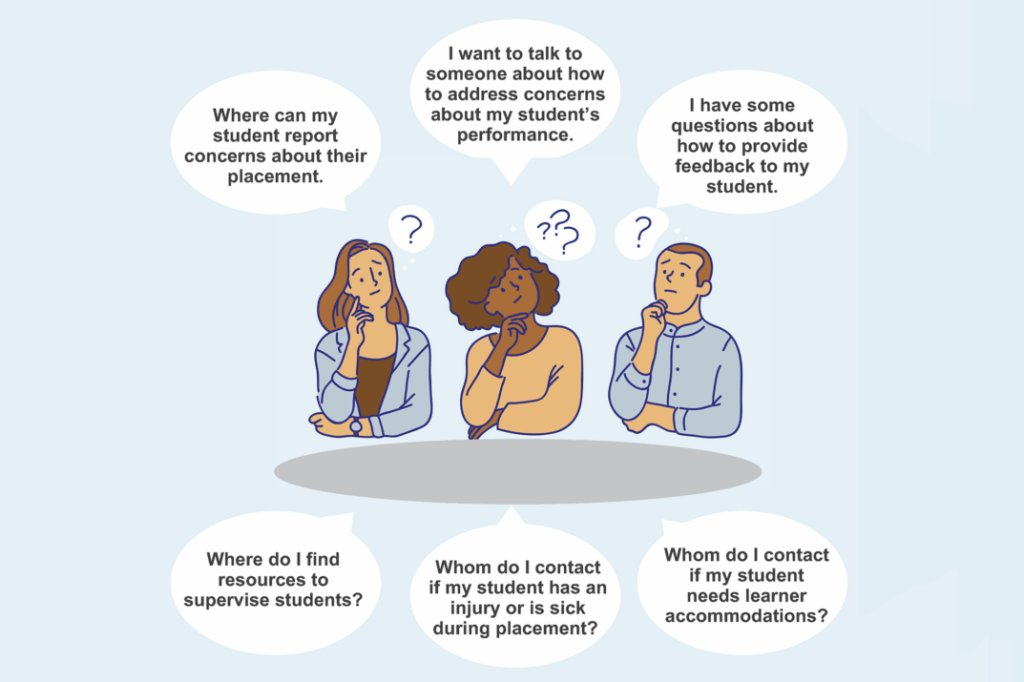
Three years ago the Education team and the Centre for Faculty Development, a partnership between Unity Health and the University of Toronto’s Temerty Faculty of Medicine, surveyed Unity Health’s sites for feedback on where preceptors and educators go for guidance on student issues. From the results of the survey, the Education team identified the opportunity to create more centralized and accessible resources for educators navigating any situation that may arise from their learners.
The Education team offers coaching and guidance to educators who are handling complex situations with their students, and the CFD also offers comprehensive training and programming for educators, including courses that are tailored to teaching in the clinical context and effective communication.
Health care is fast-paced and can come with highly emotional experiences and quick decision-making. An important part of making sure that students feel like they matter is teaching them about the collaborative nature of the sector.
At Unity Health there’s a major emphasis on interprofessional learning and creating opportunities to work in teams and appreciate the work of all the hospital’s disciplines. Collaboration can, at times, mean differences of opinion, and fostering the ability to handle safe conflict and differences of opinion is important for students.
“Good patient outcomes are tied to collaboration,” says Miles. “There are plenty of scholarly articles that show how team dynamics and interactions impact patient care.”
At the end of the day, Miles says, supporting students and educators comes down to staying true to the values of Unity Health, leading with compassion and striving for the goal of delivering excellent care experiences.
This article was submitted by Unity Health.