
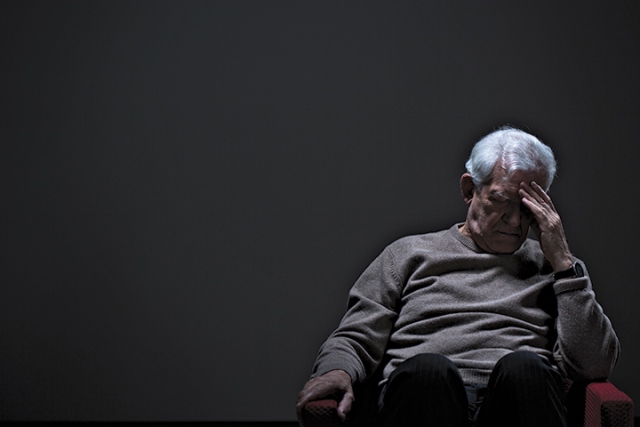

My dad was diagnosed with dementia a couple of years ago. word Now I notice that he is restless and crying. Is this sadness a normal part of the disease?
Depression can indeed be part of dementia. Some research has shown that up to 78 per cent of people with Alzheimer’s disease suffer from symptoms of depression. It is also common that family members report depression more than clinicians do. Depression is most common in the early to middle phase of the disease. Since depression and dementia can exhibit similar symptoms, it is sometimes hard to differentiate what is actually occurring. If you suspect a problem, it is imperative that you see your doctor, since a proper mental-health examination is essential.
To muddy the waters further, it is reported that there is a two- fold increase incidence of Alzheimer’s in depressed elderly in the community. Dr. Madan, psychiatrist-in-chief at Baycrest Health Sciences, explains: “One theory is, that depression that occurs right before Alzheimer’s disease is an early symptom or manifestation of the illness. Again, this points to the reason to seek treatment early.”
Some studies report that symptoms of depression may be less severe when someone already has a dementia. Two common symptoms of depression in dementia are irritability and social withdrawal. Other signs and symptoms to look for include crying, lack of appetite and a lack of interest in activities that the person previously enjoyed. A lack of interest in being with people and a general lack of desire to participate in social activity are also symptoms of depression.
With dementia it is important to realize that more than one cause can create a behaviour change. Hearing impairment, or an inability to understand an activity are two such causes; while some impaired individuals become easily overwhelmed in a given social situation. These are just some examples of why someone with dementia may withdraw and appear sullen or depressed.
The two conditions share many overlapping symptoms and older adults who experience depression for the first time may also have signs of cognitive decline.
The course of treatment can vary, but it is important to know that there are both pharmacological and alternative treatments to help with either or both depression and dementia.
Doctors who specialize in this care can help determine which drug, if any, to try. Families often worry about interactions with other medications, but many of these drugs are safe and can be taken without issues.
Medication is not the only way to treat mood issues. Some clinicians believe that the root of mood issues in certain individuals with dementia is an absence of activity at the right level. This is key as it is important to find the balance between over and under-stimulating a brain that is changing. Finding activities that are purposeful and enjoyable is a must. Many day programs work on this premise and help to support the individual’s strengths.
Mood issues may also be addressed by friends or family who can support the individual by providing them a sense of well-being and usefulness. It is not always easy to be an understanding and patient caregiver to someone who has dementia. This sense of involvement with family can help prevent depressive symptoms.
The key element as a caregiver is to sort the symptoms out and to work on treating the right issue while engaging the person to the best of their — and your — abilities.
Nira Rittenberg is an occupational therapist who specializes in geriatrics and dementia care at Baycrest Health Sciences Centre and in private practice. She is co-author of Dementia A Caregiver’s Guide available at baycrest.org/dacg. Email questions to caregivingwithnira@baycrest.org.