

By Julie Dowdie
It’s a scenario that happens in doctors’ offices every day.
A patient who has waited months – often over a year – to see an orthopaedic surgeon finally has their appointment and is told surgery is not the right treatment. Their wait begins again to see a specialist like a physiotherapist. Or, if they are referred for surgery, another frustratingly long wait is before them as they continue to deal with debilitating and often unbearable joint or lower back pain.
However, a comprehensive new model at Markham Stouffville Hospital (MSH) is aiming to reduce these months-long waits to simply weeks.
MSH is the first hospital in Ontario to provide orthopaedic care under the Ministry of Health’s rapid access centre (RAC) model to people with hip and knee, lower back/spine, shoulder, and foot and ankle joint issues.
MSH, along with several other Ontario hospitals, have been providing hip and knee and lower back and spine care under the RAC model since 2006. MSH is the first hospital in Ontario to add foot and ankle, and shoulder care to cover all four major orthopaedic areas.
“The RAC model is a game-changer for orthopaedic patients,” said Dr. J. Stephen McMahon, an orthopaedic surgeon at MSH and the York Region surgeon lead for the musculoskeletal hip and knee program.
Dr. McMahon explains that patients are able to have quick consultations – usually within two weeks after a referral is received from their family physician – with a skilled advance practice physiotherapist who can assess if they are a candidate for surgery.
If surgery is the right option, their procedure is usually scheduled within two months. And if surgery is not the best treatment, the patient also can be quickly referred to another practitioner, such as a physiotherapist or sports medicine physician.
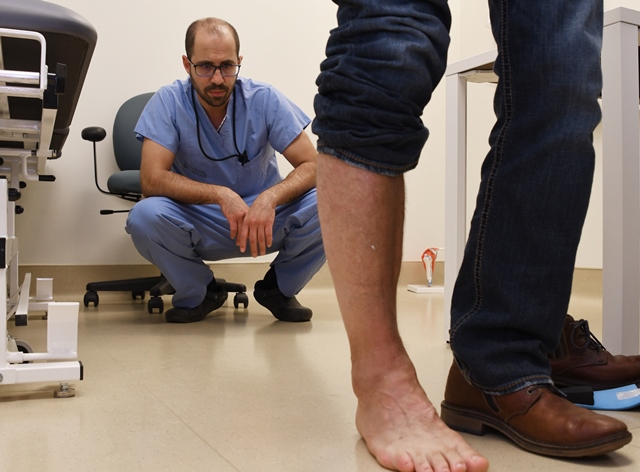
MSH orthopaedic surgeon Dr. David Santone, who heads up the RAC foot and ankle clinic, adds that “under the RAC model, surgeons like myself will be seeing only the most appropriate, pre-selected patients, avoiding needless appointments and saving our healthcare system valuable dollars.”
Glyn James describes the care he received at MSH to replace his left hip in 2018 as “unbelievable.”
Following a consultation with Dr. McMahon in the summer of 2018 that confirmed the need for surgery, the now 57-year-old paramedic with Toronto Paramedic Services made the decision to wait until early 2019 for his surgery based on his work schedule. But as his mobility lessened and his pain increased, Glyn was able to take advantage of an opening and have his surgery that fall.
In addition to the short wait time, Glyn benefitted from Dr. McMahon using what’s known as the ‘direct superior approach’ for his hip-replacement. This leading-edge procedure allows for a faster recovery time with less pain.
“I had my right hip replaced in 2016 at another hospital and I was in agony for more than six weeks during my recovery following the surgery,” Glyn explains.
“With my hip replacement at MSH, it was like night and day. I was able to get up two hours after the surgery, I was home the next day and back at the gym in less than a week.”
“We’re incredibly proud of the care we’ve been able to provide to our orthopaedic patients and we’re looking forward to serving even more people under our newly expanded model; helping them to get back to a life without joint or lower back pain,” said Dr. McMahon.
For more information on the RAC model at MSH, visit www.msh.on.ca/ortho.
Julie Dowdie is a Senior Communications Specialist at Markham Stouffville Hospital.