

Study in human cells finds low-cost drug keeps virus dormant through an unexpected pathway, pointing the way to new treatments
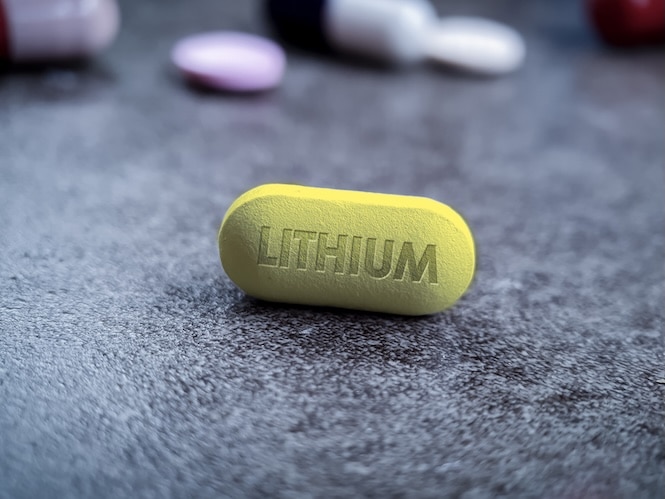
Lithium, a widely used treatment for bipolar disorder and other mood disorders, has shown early promise in suppressing HIV, McGill University researchers report.
A new study published in iScience found lithium can prevent infected cells from reactivating, and that it does so through an unexpected biological mechanism.
The findings point toward future treatments designed to mimic lithium’s beneficial effects while avoiding its broader impacts on the body.
“One major thrust in HIV cure research is asking whether existing drugs can be repurposed. Because lithium is inexpensive and already approved for other uses, it offers a faster starting point than developing a new drug from scratch,” said senior author Andrew Mouland, Professor in McGill’s Department of Medicine and Head of the HIV-1 RNA Trafficking Laboratory at the Lady Davis Institute for Medical Research.
The results do not mean people with HIV should take lithium, he said. The psychoactive drug can cause significant side effects and has not yet been tested in humans as an HIV treatment.
A step toward a ‘functional cure’
An estimated 40.8 million people around the world were living with HIV in 2024. Even with effective antiretroviral therapy, the virus can remain hidden in immune cells and rebound if daily treatment stops.
A “functional cure” aims to overcome this challenge. Rather than eliminating the virus entirely, the goal is to keep HIV dormant, so it cannot restart infection, potentially reducing the need for continuous daily medication.
“In our experiments, lithium directly suppressed HIV reactivation in lab-grown human cells, something that had not been clearly demonstrated before,” said first author Ana-Luiza Abdalla, who conducted the work as a PhD student at McGill and is now a postdoctoral fellow at the Montreal Neurological Institute.
The team also gained new insights into the mechanism involved.
Earlier research suggested lithium might work by activating autophagy, the cell’s recycling system. Because many drugs studied in HIV cure research affect this pathway, scientists assumed autophagy was responsible for keeping the virus dormant.
This study challenges that assumption, made possible by a fluorescence-based test developed by University of Manitoba researcher Thomas Murooka that allows scientists to distinguish between dormant and active virus in cells.
“What surprised us was that the effect persisted even when we disrupted autophagy,” Abdalla said. “That suggests other pathways are involved, possibly ones HIV relies on to restart.”