
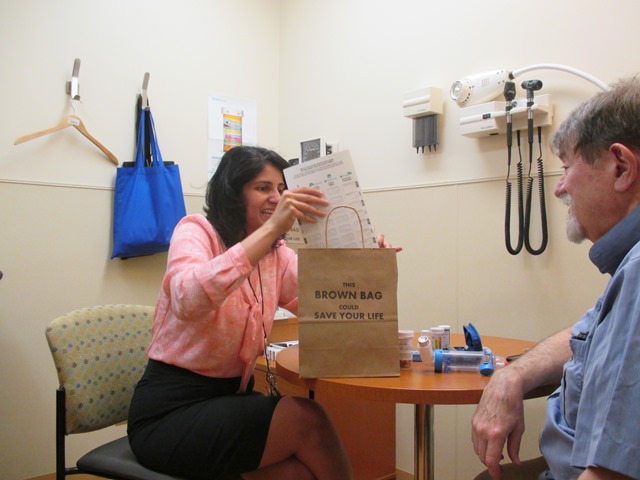

As our population ages, more people are managing multiple chronic and complex conditions requiring many different types of medication. The desire to empower patients to partner with their primary care health care providers to promote effective medication use is at the heart of a new and innovative #medication safety program at #Mount Sinai Hospital, part of Sinai Health System. The Mount Sinai Academic Family Health Team developed the Brown-Bag Medication Check-Up Program, which was recently recognized by the Association of Family Health Teams of Ontario with a Bright Lights Award for transforming patients’ and caregivers’ experiences and health.
Family Health Team patients with conditions such as diabetes, angina, heart failure, hypertension, asthma or COPD, may self-refer or be referred by any family medicine team member to the clinic pharmacist for a comprehensive Brown-Bag Medication Check-Up. Patients are provided with a brown paper bag to gather all of their current medications and over-the-counter products together in before coming in for their next appointment. The clinic pharmacist, Suzanne Singh, works with patients and their providers to go through each medication with the patients, identifying and explaining any potential problems, such as mediations that have adverse effects or interact negatively with each other, dangerous or unpleasant side effects, and incorrect dosages. Through patient education and #medication safety recommendations, this ensures safe and effective medication management.
The clinic uses a creative patient-engagement strategy, including video promotion in the clinic’s waiting room and Facebook page, with brown bag displays in clinic exam rooms so patients may easily pick up a brown bag containing information about the initiative and instructions on gathering medications.
Feedback from patients has been positive.
“Patients seem to appreciate the opportunity to have a personalized medication review where no medication-related question is off-limits,” Ms. Singh notes. She also noted that the program’s inter-professional approach is critical to its success. “Our team includes a diverse complement of family doctors, family medicine residents, nurses, nurse practitioners, social workers, dietitians, administrative staff and me. The program draws on the expertise of all team members to help promote a culture of medication safety.”
“I’m very proud of our Family Health Team for taking a leadership role in addressing the important issue of medication safety,” says Dr. David Tannenbaum, Family Physician-in-Chief at Mount Sinai Hospital, part of Sinai Health System. “This award recognizes the importance of simple and effective team-based initiatives that are anchored in primary care where we can engage our patients with the aim of improving their health outcomes. The Brown-Bag Medication Check-Up Program is a great example of how Sinai Health System is championing improved care for patients with chronic conditions through unique, collaborative partnerships between care providers and patients to optimize medication management.”
The Family Health Team is committed to the ongoing evaluation and dissemination of the Brown-Bag Medication Check-Up Program, which is designed to be shared with other family physicians, inter-professional teams, and patients.