
 is a brand new resource for patients to get information.)
When Elaine Fantham was diagnosed with heart failure in 2013, she had questions: what could she eat? How could she prevent further deterioration of her heart? To find answers, she relied on printed brochures that explained the basics of heart failure and its effects.
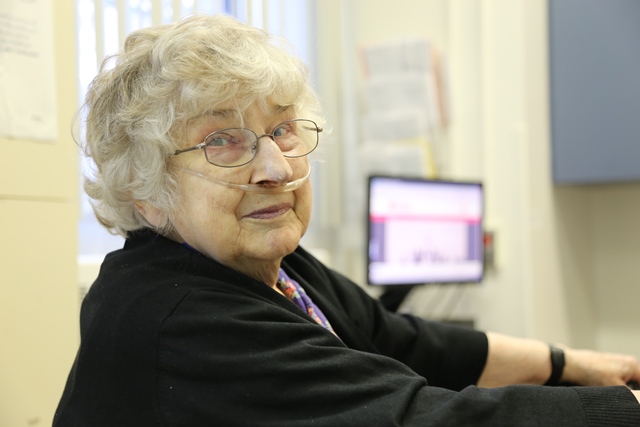
Fast forward three years, while Elaine is waiting for her appointment in St. Joseph’s Health Centre’s Heart Function Clinic, she now just scrolls through a new online resource that has the latest information she needs to answer her questions and help inform the conversation she is about to have with her cardiologist.
The Ted Rogers Heart Failure Patient Education website (www.tedrogersheartfunction.ca) is a brand new resource developed by a St. Joe’s physician in partnership with the Peter Munk Cardiac Centre, University Health Network and the Ted Rogers Centre for Heart Research that is changing the way people get their health information.
“It makes me more comfortable knowing this resource is available,” says Elaine. “I would use it after speaking with my cardiologist if I had any questions. The videos are helpful – it’s very good if you can actually see what’s being explained.”
Every year, more than 50,000 people are diagnosed with heart failure in Canada. The news can be unexpected and information that is shared during the first few conversations between patients and their doctors can be difficult and overwhelming to absorb.
“We wanted a resource that patients could access on their own, when they were ready to learn more about their diagnosis,” said Dr. Peter Mitoff, a cardiologist at St. Joe’s who was the lead physician on the website. “We spoke with patients and the feedback we got was that they didn’t want to read about heart failure – they wanted to be able to visualize what’s happening in their body.”
The bright, bold website shares information through text, diagrams and videos. It provides a comprehensive look at what heart failure is, how it’s caused, what the treatments are and how someone with heart failure can live a healthy life.
“This is amazing for us as educators,” says Jennifer Comello, Registered Nurse in our Heart Function Clinic. “We’re working to make this available on all patient monitors at bedsides so when we’re meeting with patients in the clinic or in their rooms, we can actually show them what we’re talking about; this will be so beneficial in terms of helping them understand their health condition and how to manage their diagnosis. Patients can also use the videos to talk about heart failure with their family when they go home.”
This website is an exciting patient education resource that is helping to innovate and redesign our patient experience by giving people the tools they need, where they need them, to help manage their health conditions.
This is just one of the many patient education resources being developed by our teams. Teaching and education is deeply ingrained in everything we do at St. Joe’s – learn more about our other initiatives by visiting our website (www.stjoestoronto.ca).