

By Kelsi Break
It’s been almost 10 years since Rob Staffen was in an accident that would change his life forever. Staffen was cycling down a mountain near Palm Springs, California in October 2012 when suddenly his road bike malfunctioned, catapulting him head-first into the rock-strewn desert landscape. The impact to his skull resulted in a severe traumatic brain injury.
A concussion is a brain injury caused by a hit to the head or body that forces the brain to move back and forth inside the skull. Known as an invisible injury, a concussion can affect a person’s physical, mental, behavioral and/or emotional health. While 80 per cent of people recover from a concussion, 20 per cent have persistent symptoms that can develop or worsen over time. Too often after a concussion people either stop activity all together, delaying recovery or push themselves, doing too much too quickly, intensifying their concussion symptoms.
To combat this, Becky Moran, an Occupational Therapist with St. Joseph’s Health Care London’s (St. Joseph’s) Acquired Brain Injury (ABI) Outpatient Program at Parkwood Institute developed the Pacing and Planning Program, a points system to help concussion patients track, manage and pace their daily activity. The system, much like points tracking used by dieters to monitor food choices, assigns values to tasks like driving, grocery shopping, screen use and exercise so patients can be active enough without overdoing it. Each person is given a total number of points per day that will keep their symptoms in the “safe range” and are encouraged to increase their points as their recovery progresses.
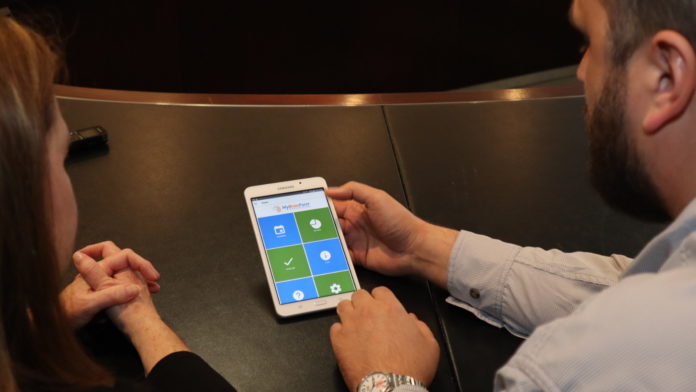
The Pacing and Planning Program has helped hundreds of St. Joseph’s rehabilitation patients achieve their recovery goals. And now, thanks to funding provided by St. Joseph’s Health Care Foundation, the Cowan Foundation and a non-profit founded by the Staffen family called the Brain and Mind Matters Community Fund, the Pacing and Planning Program is available on your electronic devices. MyBrainPacer™ was co-designed by ABI patients and their caregivers, integrating technology and health care expertise into one easy-to-use tool. The app helps users safely monitor and track their daily activity and concussion symptoms using a smartphone, tablet, or personal computer.
Launched February 1, MyBrainPacer™ App is part of a toolkit of educational resources St. Joseph’s ABI team has created to help concussion patients self-manage their condition. The resources also include a series of Concussion Care videos, an audio playlist of mindfulness exercises and resources to aid recovery for common concussion symptoms like visual disturbances, noise sensitivity and balance issues.
Staffen credits the lessons he learned as a patient at St. Joseph’s with helping him get his life back on track. “Without the team at St. Joseph’s Parkwood Institute, I’m pretty sure I wouldn’t be where I am today,” he says. “The tools they provided helped me balance my life, so I can stay active but keep my concussion symptoms under control by resting when I need to. With their guidance, I was able to return to work and resuming my passion for road biking. I’m not totally recovered, but I can do the things I love—I just have to know my limits, which is perfectly OK.”
Kelsi Break is a Communications Consultant at St. Joseph’s Health Care London.