

HN Summary
• Canada’s healthcare access challenges are driven not only by physician shortages, but by limited clinical infrastructure that restricts where and how care can be delivered.
• While telehealth and AI improve communication, they do not replace the need for real diagnostic capabilities—highlighting the need for digitally connected, fully equipped care environments closer to patients.
• Expanding these distributed clinical settings can extend physicians’ reach, improve efficiency, and reduce pressure on hospitals by enabling more timely, community-based care.
Millions of Canadians still lack reliable access to primary care, and in 2023, Canada ranked last among 10 high-income countries in the proportion of people with a regular provider. Much of the national conversation has focused on healthcare worker shortages, and while expanding the medical workforce is essential, this takes years, and demographic trends suggest demand will continue to outpace supply. Nearly one-quarter of Canada’s family physicians are approaching retirement, while only 27.9 per cent of medical graduates chose family medicine in 2025, down from 31.4 per cent the year before.
These realities point to a deeper structural challenge. Improving access will require not only expanding the workforce but also extending the clinical reach of the doctors we already have beyond the capabilities of basic telehealth. By bringing fully equipped, digitally connected clinical environments into more settings, we can effectively expand doctors’ offices beyond their physical walls and enable them to properly assess patients remotely rather than requiring every visit to take place in a hospital or clinic. We must move beyond home-based phone and video calls; we must give doctors the tools to practice medicine wherever patients are.
Rethinking access to care
Healthcare delivery has historically relied on centralized infrastructure: hospitals, clinics, and medical offices equipped with diagnostic tools and staffed by trained professionals. These facilities remain essential, but they are costly, fixed in location, and inherently limited in number.
This creates a structural bottleneck, requiring patients to travel to largely centralized hubs for appointments, which often creates barriers related to distance, mobility, or scheduling. These facilities are often already overburdened by the limited number of available exam rooms. Even when physicians are available, infrastructure limits how many patients can realistically be assessed.
The consequences are particularly visible in emergency departments. Approximately 15 per cent of emergency department visits in Canada involve conditions that could be treated in primary care settings rather than hospitals. Yet when patients have no other option, the hospital often becomes the default point of care.
In rural communities, the challenge is even greater. Primary care access varies widely across the country: in some regions, nearly 90 per cent of people report having access, while in other regions the figure is as low as 62.6 per cent. About 24 per cent of emergency department visits in remote areas involve conditions that could be managed in primary care settings.
Canada’s access challenge is therefore not solely a shortage of clinicians. There is also a shortage of accessible, diagnostically capable clinical environments close to where patients actually live.
Basic telehealth and AI do not truly extend clinical capacity alone
During the COVID-19 pandemic, telehealth expanded rapidly across Canada. More recently, artificial intelligence (AI) has become a major focus of healthcare innovation.
Telehealth solved the problem of communication between patients and clinicians, but it did little to extend the clinical capabilities of the doctor’s office; communication alone is not care.
AI indeed holds significant potential to improve healthcare operations, but only if leveraged effectively. As access to care has become more difficult, many patients have begun turning to AI tools on their own to navigate their health and the healthcare system, sometimes with misleading or downright dangerous results.
However, neither conversational AI nor basic telehealth video or phone visits alone can provide the clinical data required for diagnosis and effective care. Healthcare decisions depend on objective measurements such as blood pressure readings, oxygen saturation, cardiac and lung auscultation, imaging, and laboratory testing.
As a result, many virtual encounters function primarily as preliminary conversations. Patients must still travel to a clinic or hospital for diagnostic confirmation, chronic disease management, and other clinical testing.
Care facilities cannot be optimized under strain
Hospitals increasingly serve as access points for diagnostic assessment rather than their intended role of treating emergencies. Most emergency department visits in Canada do not result in hospital admission. Instead, many involve patients seeking evaluation or diagnosis because they cannot access primary care.
This reflects a structural imbalance: hospitals are absorbing demand for clinical assessment that could often be addressed earlier and closer to patients. Expanding healthcare capacity requires enabling physicians to reach patients beyond traditional hospitals and clinics.
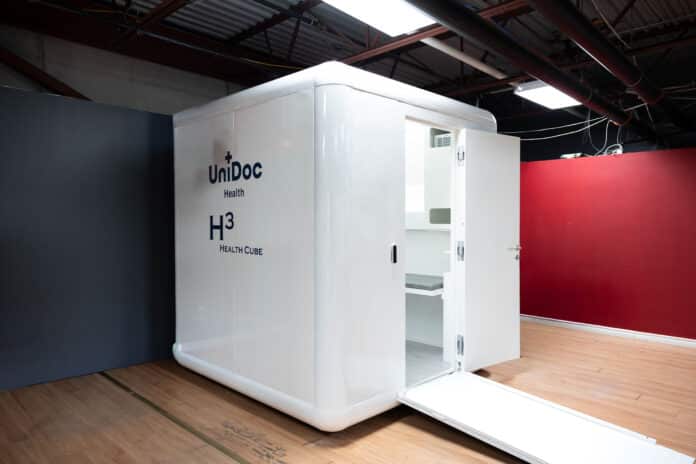
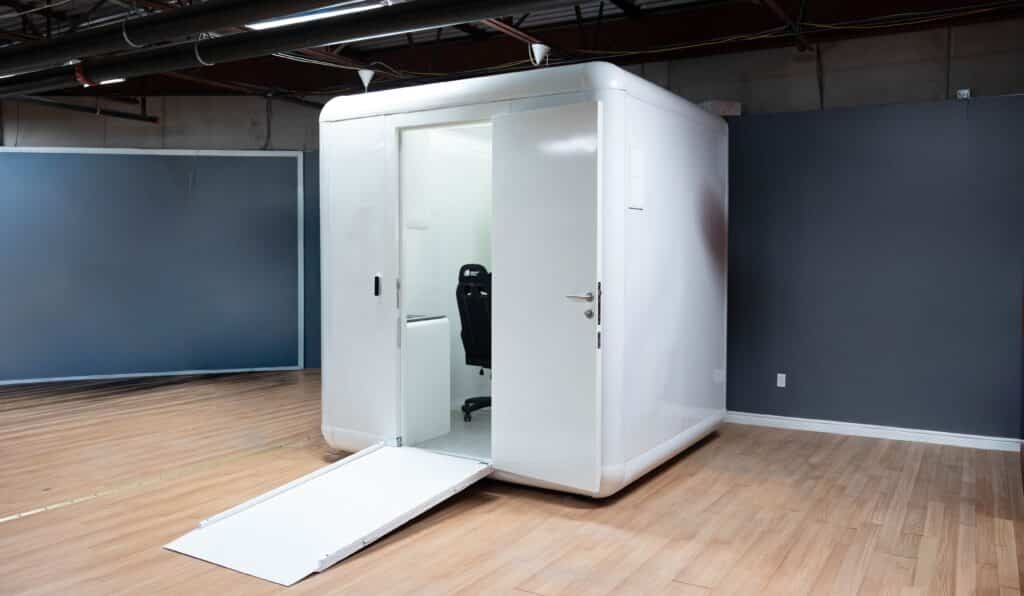
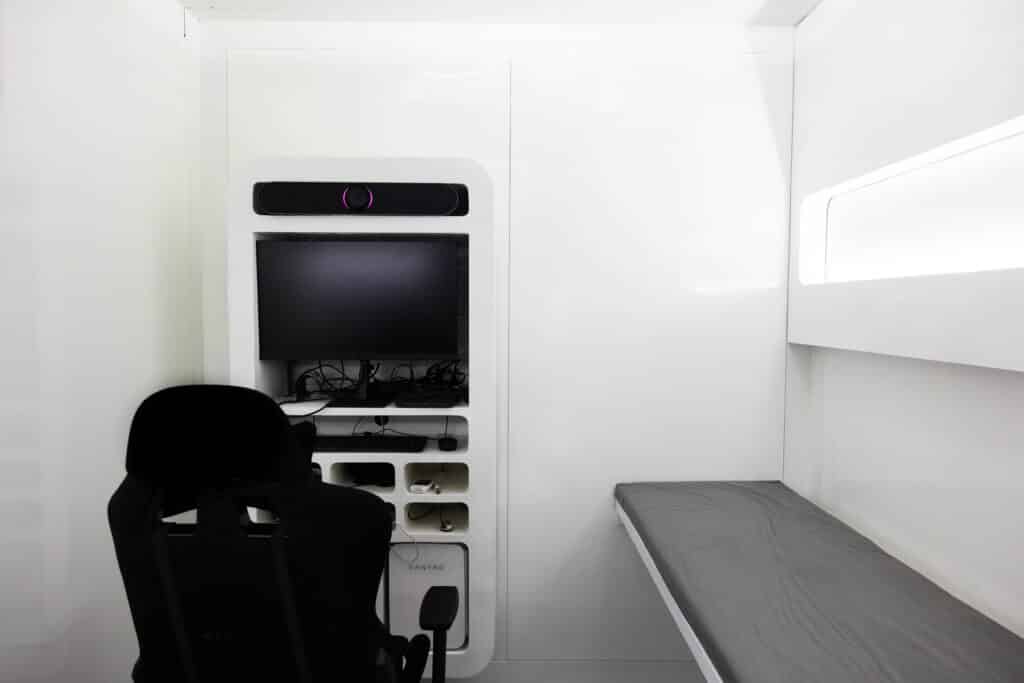
Digitally connected clinical environments, distributed across pharmacies, workplaces, seniors’ residences, or rural municipalities, can extend physicians’ reach beyond traditional clinics. This can be accomplished efficiently with compact, modular care environments that can be rapidly deployed in diverse settings and that house clinical diagnostic instruments. This represents exactly this kind of infrastructure; when local physicians or specialists are unavailable, clinicians can connect remotely if such infrastructure is in place.
What is missing from much of today’s digital health conversation is the physical layer of care delivery: clinical environments that extend where patients can be examined and diagnostic data collected.
Reversing traditional telehealth
The next evolution of telehealth should focus on bringing clinical infrastructure closer to patients. Rather than asking individuals to connect with physicians from personal devices at home, healthcare systems can deploy digitally connected, clinically equipped environments where patients can be properly assessed.
When paired with real diagnostic information, AI can play a far more reliable and practical role. These tools can assist clinicians by documenting visits, interpreting diagnostic data, identifying early warning signs, and helping prioritize care. The key is that AI must operate on real clinical inputs from properly performed medical assessments, not substitutes derived from patient self-reporting.
In this model, patients visit a standalone clinical environment where nurses or trained staff assist with examinations while physicians or specialists connect remotely and review real-time diagnostic data. Purpose-built, self-contained environments that are rapidly deployable and equipped with the instruments clinicians rely on can solve the infrastructure gap that telehealth alone never could. By bringing clinically capable environments closer to communities, virtual care can move beyond simple conversations toward fully informed clinical assessment.
Improving workforce efficiency
Canada’s clinician shortage is not only about workforce size; it is also about how efficiently clinical expertise can be deployed.
Specialists are often required to serve patients across wide geographic regions. Travel between these sites consumes valuable clinical time, and patients may wait months for consultations due to infrastructure limitations rather than the absence of expertise. Across Canada, the median wait from referral by a family doctor to receiving treatment now exceeds 28 weeks.
By allowing physicians to connect remotely to clinically equipped sites using the same instruments available in their own offices, patients visit these sites and receive care within their local communities while physicians remain in their primary practice setting. This expands physicians’ reach and enables healthcare systems to use scarce medical expertise more efficiently.
Building Capacity for the System Canada Needs
Canada cannot resolve its healthcare access challenges solely through workforce expansion or hospital construction. Both are necessary, but neither can scale quickly enough to meet growing demand.
By extending clinical capabilities into communities and pairing technology with robust diagnostic infrastructure, healthcare systems can improve access, enhance workforce efficiency, and reduce pressure on hospitals. Patients can receive clinically meaningful assessments closer to home, while physicians can reach more patients without compromising care quality.
Telehealth demonstrated that distance no longer needs to separate clinicians and patients. The next step is ensuring that diagnostic capability and clinical infrastructure can reach patients wherever they are. Digital care must move beyond conversation to become real medicine.
Canada’s healthcare system does not simply need more doctors. It needs the infrastructure to extend the reach of the doctors we already have.
Tony Baldassarre is CEO of UniDoc Health, developer of the H3 Health Cube, a modular virtual clinic designed to extend the reach of physicians by enabling remote consultations supported by integrated diagnostic tools and on-site clinical assistance. He has more than 30 years of leadership experience across the technology, communications, and security sectors.