

By Shirley Price
West Park Healthcare Centre is a provincial leader in the care and rehabilitation of patients who have suffered from a stroke and our rehabilitation service first received Accreditation Canada’s Stroke Distinction™ status in 2016. In October, while still under pressure as a result of the pandemic, and in the midst of the construction of its new hospital, West Park invited surveyors to conduct this year’s survey, giving the organization an opportunity to renew its Distinction status.
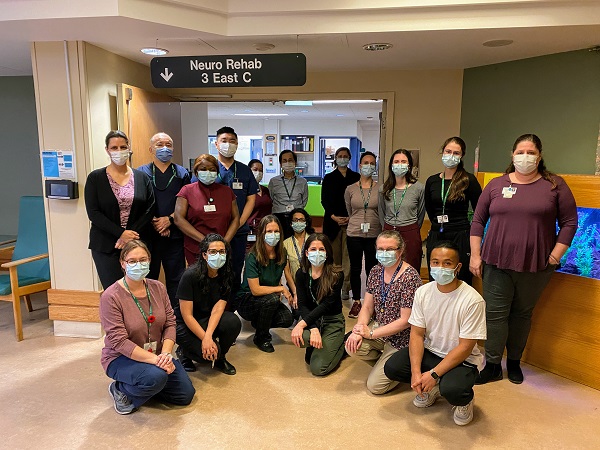
Rachna Chaudhary, Clinical Manager, and an active leader in the accreditation process explains, “West Park’s Neurological Rehab Service is designed to provide high intensity rehabilitation to patients recovering from a stroke, acquired brain injury or neurological condition, however this survey was focussed on the care we provide to stroke patients.” Chaudhary continued, “Our ultimate goal is for patients to reach the level of independence that allows them to return safely to their previous living situation.”
Lisa O’Drowsky, Director, Quality, Risk & Patient Safety, notes the importance of the survey, stating “Stroke Distinction™ is a rigorous and highly specialized process above and beyond the requirements of Accreditation Canada’s Qmentum program.”
There were many highlights over the course of the survey, but it was the strength and unique make-up of the interprofessional team, established relationships with patients, families and community partners, the team’s excellence and innovation project, and a fulsome and thoughtful approach to discharge that made West Park’s stroke care stand out.
Stroke care at the Centre begins with an interprofessional team that is truly led by the patient and the family, and includes care coordinators, nurses, occupational therapists, pharmacists, physicians, physiotherapists, rehabilitation assistants, speech-language pathologists, a communications disorders assistant, registered dietitian, and social worker. The allied health staff aim to provide stroke patients with 180 minutes of daily therapy daily.
Team members reported that they are always learning from colleagues. This was demonstrated by the return of bullet rounds, put on hold in the early days of the pandemic, where the interprofessional team meets daily to discuss their patient caseload, what is going well and what might need to be changed in the patients’ care plans, sharing various perspectives of all clinicians.
Strengthening the unique program design, the organization houses the Spasticity Clinic, which is known world-wide for its expertise in providing care to patients following stroke. The team benefits from the expertise of this program as physiatrists also provide consultation services to the neurological rehabilitation unit and are instrumental in leading weekly interprofessional team rounds.
During the visit, surveyors noted collaboration with CorHealth Ontario and the Toronto Stroke Network, leveraging support to ensure the use of Canadian Stroke Best Practice Recommendations for the standardization and consistency of stroke services. West Park’s clinicians participate in committees and initiatives led by the Stroke Network to ensure patients are receiving the most up to date and evidence based care.
Collaboration and partnership in program planning, design, and implementation is foundational and members of the Patient Advisory Committee proudly highlighted the involvement of patient partners in planning, designing and evaluating the services and have been engaged in the design of the new hospital.
Additionally, patients are involved in continuous improvement through the team’s excellence and innovation project. The initiative aimed to develop an aphasia friendly medication chart and aphasia friendly education materials to assist patients with moderate and severe aphasia to participate in West Park’s self-medication program. The program helps to assess a patients’ ability to manage their medications prior to discharge home. Patient involvement in the design materials along with interprofessional collaboration was a feature of the project design and contributed to its success as patients reported they had a better understanding of the self-medication program and also understood the purpose and use of their medications prior to discharge.
“Each day we learn something from patients that helps us to improve an aspect of the care and the services we provide, noted Clinical Practice Lead, Lynn Suter, “and we’ve always felt that our relationship with patients is a true partnership.”
When speaking with surveyors, patients reported feeling engaged in their care, that families are involved in discharge planning, and that they are supported to transition home with the implementation of a follow-up phone call only days after discharge. The final touch is a smooth transition to outpatient services, reinforcing that the care doesn’t end at discharge was also noted.
The survey report paints a picture of true collaboration between stakeholders, one of West Park’s organizational values, and the outcome is reason for celebration across the organization. O’Drowsky feels, “West Park’s success is a testament to the Centre’s commitment to the ongoing process of quality improvement in ensuring provision of the highest quality of Stroke services.”
Shirley Price is the Director Clinical Programs, Rehab and Ambulatory Services at West Park Health Centre.