

HN Summary
• uOttawa multidisciplinary team has built new hydrogels from synthetic peptides that can be customized as needed – a defining hallmark in the emerging era of personalized medicine.
• Offers game-changing potential to impact future biomedical applications, from sealing traumatic wounds to closing surgical incisions.
• Bonding strength is comparable to commercially available tissue adhesives.
A research team from the University of Ottawa has engineered a customizable biomaterial offering game changing potential for future biomedical applications, including soft tissue repair, closing surgical incisions or sealing wounds.
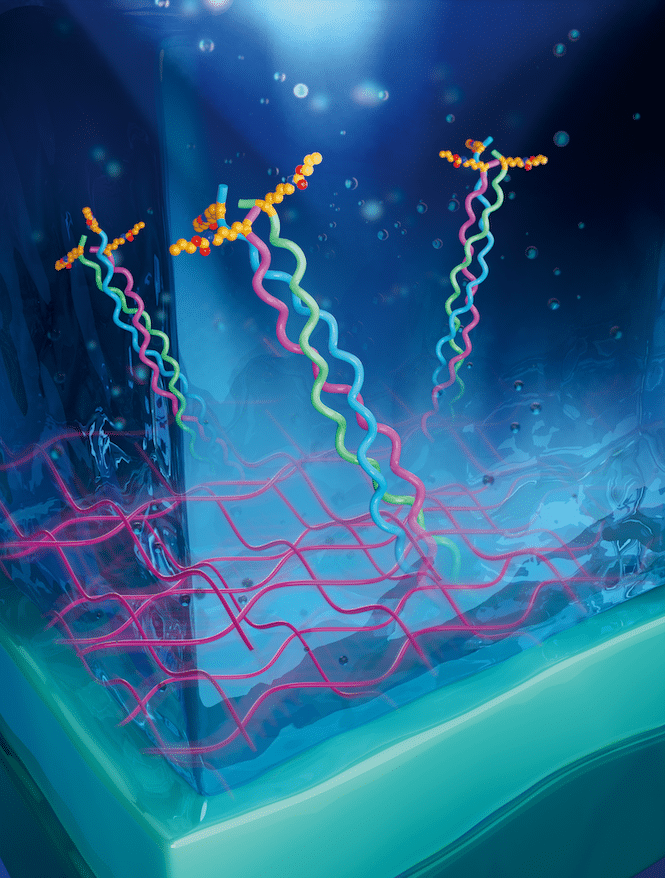
Harnessing the power of collagen-inspired peptides (short chains of amino acids that form the building blocks of proteins) and light-triggered chemistry, they developed a new biomimetic hydrogel that combines strength, adaptability, and biological compatibility. Hydrogels are made of water-based material that has a gelatinous texture. Its bonding strength is comparable to commercially available tissue adhesives such as LiquiBand, meaning the material can close flesh wounds while safely breaking down in the body over time. Unlike many existing biomaterials used as soft tissue adhesives, it doesn’t rely on any synthetic polymers which can trigger unwanted immune responses.
“This new body of work is a leap in the space of biomimetic materials for tissue and organ repair. One of the most important aspects of this research is that we develop a stand-alone peptide-based material for tissue bonding,” says lead author Dr. Emilio Alarcón, professor at the Faculty of Medicine and scientist at the University of Ottawa Heart Institute.
Lab-designed materials that mimic nature
The research team carefully designed peptides inspired by the triple-helix structure of natural collagen but produced synthetically, allowing for fine control over composition, performance, and safety.
One of the key innovations lies in how these peptides assemble and lock together. Once dissolved in a buffer solution, the designed peptides spontaneously organize themselves into structures that create the foundation of the hydrogel. To further strengthen the material, the researchers use a light-activated chemical reaction that rapidly formed stable connections, transforming the soft material into a flexible and durable gel for soft tissue repair.
Dr. Alarcón says this study paves the way for researchers across the globe to explore the use of peptides as “the next generation of regenerative platforms.”
Lab tests showed that the materials are cell friendly and biodegradable, allowing them to safely break down in the body over time.
Biodegradable materials ensure safer outcomes
Alex Ross, a PhD candidate who is one of two primary authors of the newly published study, says this kind of biocompatibility is essential for any material entering or interacting with the body.
“Biodegradability is useful as it means the material doesn’t have to be removed later – for example, getting sutures removed — and also contributes to the safety profile as things the body can clear out are much less likely to pose toxicity,” Ross says.
Daniel Nguyen, the paper’s other primary author, expanded on this point: “If you put something inside the body, you want it to be as unobtrusive as possible. It shouldn’t harm cells, and it shouldn’t stay there forever. That matters because materials that linger or irritate tissue can slow healing or lead to complications. Because our material is made from collagen-inspired peptides, the body can break it down using the enzymes it uses to remodel natural tissue.”
Both Ross and Nguyen are members of the BioEngineering and Therapeutic Solutions (BEaTS) lab directed by Drs. Erik J. Suuronen and Alarcón, as is prominent cardiac surgeon Dr. Marc Ruel.
‘Mechanically Stable and Tunable Photoactivated Peptide-Based Hydrogels for Soft Tissue Adhesion’ was published in the Advanced Functional Materials journal.