

It’s normal to want quick relief when you’re sick fighting an infection. Antibiotics seem like a good fix, but using them too often or for the wrong reason has created a serious problem. Some infections have become stronger and no longer respond to treatment.
Some people call them “superbugs.” They’re not super, but they’re hard to kill.
“Our antibiotic toolbox is getting smaller,” says Dr. Victor Leung, Physician Lead for Antimicrobial Stewardship Program and Medical Director of Infection Prevention and Control at Providence Health Care. “That’s not a future problem. It’s happening now.”
What is antimicrobial resistance
Every year, thousands of people in Canada face infections that don’t respond to antibiotics. This is called antimicrobial resistance, or AMR, and it’s a crisis that is one of the world’s biggest health threats.
“Antimicrobial resistance occurs when either bacteria, fungus, parasites or viruses, become resistant to treatment with medications that we use,” says Dr. Leung.
AMR can affect basic care, such as treating a surgical wound or infection after childbirth. If antibiotics stop working, minor infections can become serious.
“We’re seeing infections that used to be easy to treat. Now they’re stubborn, and sometimes deadly,” he says.
How hospitals are affected
Travel adds to the problem. Germs move between countries as easily as people do. Someone carrying resistant bacteria might not even know it. Once inside a hospital, those germs can spread to others.
“The challenge is then making the diagnosis of what’s causing the infection and administering the best options for treatment,” says Dr. Leung.
When first line antibiotics don’t work, recovery takes longer. You might need different antibiotics that cause more side effects. Patients stay longer in hospitals, which increases the transmission risk.
“This isn’t just a hospital issue,” says Dr. Leung. “AMR affects the continuum of care and people can acquire AMR infections in the community.”
Canada faces another problem. Doctors have fewer treatment options because some newer medications are available in other countries but not here.
What Providence Health Care is doing
Providence Health Care inves ted early in tackling this threat. In 2013, it started the Antimicrobial Stewardship Program (ASP) to help prescribers use antibiotics wisely. The program supports both acute and long-term care areas. The goal is simple: optimize the treatment of infections, while keeping antibiotics effective for the future.
“We want to slow down the development of antimicrobial resistance, reduce the collateral damage from indiscriminate antibiotic use, and at the same time optimize treatment outcomes,” says Dr. Leung.
The results have been strong. The approaches, pathways and tools developed by Providence ASP have spread across BC and Canada.
The Firstline app
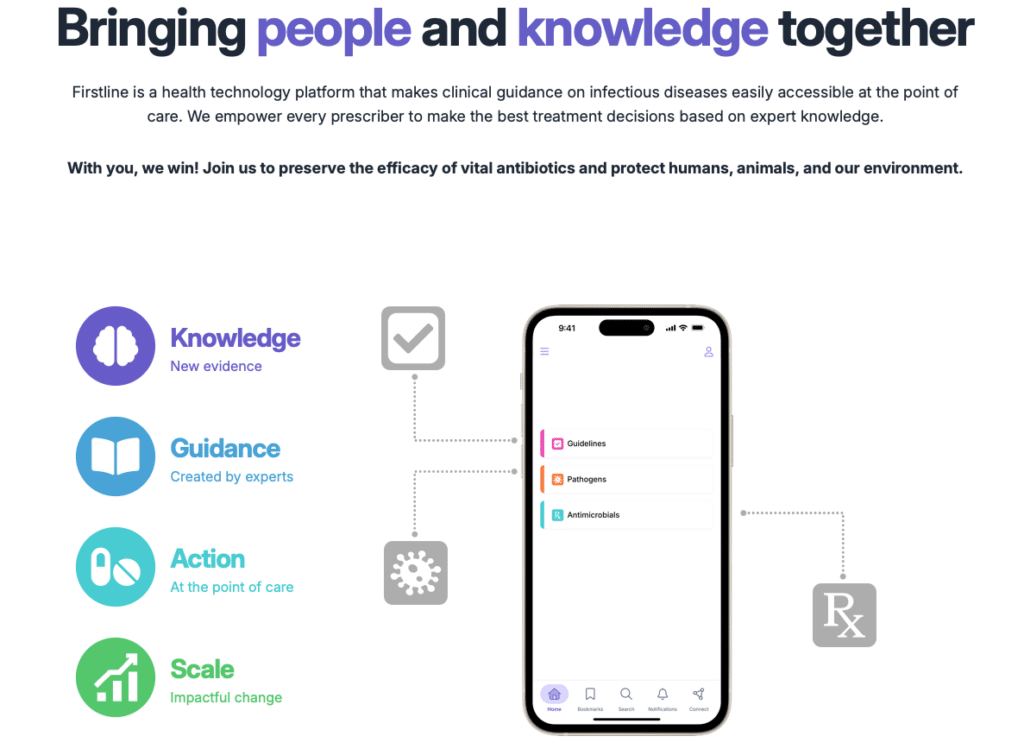
Providence ASP was the second hospital network in the world to co-develop the Firstline app, a phone and web tool that gives point of care treatment advice. Patients benefit from local guidelines. The app helps providers decide if antibiotics are needed, which one to use, and when to stop.
Firstline is now the most popular antibiotic app in the world and is used by the World Health Organization (WHO) and health networks and hospitals globally.

A call for leaders to act on the national AMR plan
In September, Dr. Leung met with lawmakers in Ottawa to talk about the growing threat of AMR. Canada is leading G7 health talks this year and made AMR a top priority. The high-level AMR meeting enabled colleagues from G7 to provide updates on progress in addressing AMR.
Dr. Leung joins a panel in Parliament to explain how antimicrobial resistance impacts people working in hospitals and clinics.
“We’re not waiting for a crisis to worsen. We’re acting now and we need policy to keep up,” says Dr. Leung.
Dr. Leung supports the Pan-Canadian Framework for AMR that was released in 2022. The plan calls for funding, clear strategies, and a “One Health” approach that treats human, animal, and environmental health as connected.
He called on lawmakers to back the national framework to fight drug-resistant germs and step forward on policy, tracking, and funding that will create real change.
Canada’s role in fighting AMR
With G7 health leadership and strong surveillance, Canada has a window to act. Its strong infrastructure positions Canada to play a global leadership role.
“The best way to deal with antimicrobial resistance is to prevent it from occurring. For that to happen, we need better access to vaccines and new treatments, stronger support for stewardship, and policies that help hospitals do this work well,” says Dr. Leung.
In October, Dr. Leung was also invited as a witness at the House of Commons’ Standing Committee on Science and Research for their study in Antimicrobial Resistance.
What you can do
Dr. Leung says resistance will always develop, but you can slow it with a few simple actions:
• Use antibiotics only when needed (e.g. don’t take antibacterials for viral infections like the flu)
• Stay up to date on vaccinations
• Learn about antimicrobial resistance. It affects everyone.
You can download the Firstline app at https://firstline.org.
“Smart antibiotic use isn’t about cutting back. It’s about using the right drug, at the right time, for the right reason,” says Dr. Leung.