

By Claire Mallette
Within the stressors of today’s rapidly changing technological healthcare environments, many healthcare providers are finding it difficult to incorporate quality compassionate care into their practice. While there is an overwhelming recognition that healthcare delivery needs to change, strategies to do this are often addressed through top-down initiatives. These strategies are often initiated by leaders within the organization, who sponsor a change initiative to be rolled out to staff, An alternative to this top-down approach is for healthcare providers to work together to improve patient care, with the support and participation of the leadership team.
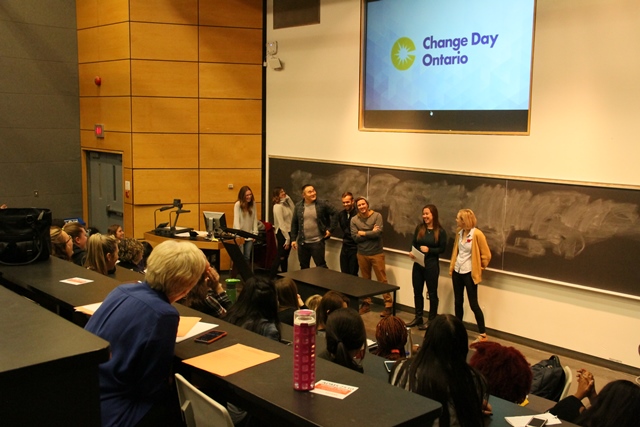
An example of this type of change occurred this fall with, Change Day Ontario: Make a Difference in Patient Care. Change Day is a grassroots movement that is being adopted around the world to improve quality compassionate care. In Ontario, the initiative was launched by Associate Medical Services (AMS) and Health Quality Ontario. Change Day was based on the belief that one person or a group of people can improve healthcare through taking actions big or small to collectively improve the healthcare system. Individual acts of change, regardless of the size, can add up to the significant improvements for Ontarians, the professions and the healthcare system overall.
 Frontline healthcare providers often have ideas of how things should change to improve patient care and/or the work environment. However, they can feel powerless in actually implementing these initiatives. It is important for them to realize their own power as change agents in making a difference. The Change Day Ontario initiative was designed to empower people within the healthcare system to make these type of positive changes through making pledges and taking actions, big or small, to improve care. .
At York University’s School of Nursing, myself and fellow faculty members, Mavoy Bertram and Brenda Orazietti, took up the Change Day initiative as part of two senior-level undergraduate nursing courses. Five hundred senior undergraduate nursing students were given the assignment to take up the Change Day Ontario Challenge by identifying a healthcare issue that they are passionate about, then develop and implement a change initiative and create a social media strategy. The goal of the assignment was to impress upon the students the power they have to be change agents and create change within the healthcare system.
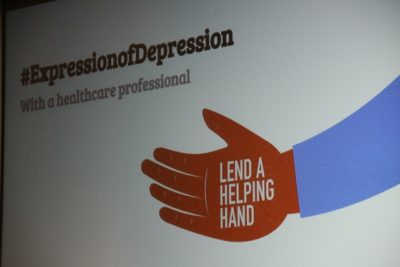
The students were energized! They realized their own power in making a difference as change agents and used their knowledge to create overwhelmingly powerful strategies. Their initiatives included, for example: a social media strategy highlighting inequities that indigenous families face in accessing prenatal and labour and delivery services in remote areas of Northern Ontario; a “Homeless not Hopeless” initiative, with a pledge to decrease the stigma surrounding homeless youth; influencing the nursing practice issue of patients’ loss of autonomy when admitted to hospital; and an initiative entitled, “Expression of Depression: Accessing Mental Health Services for Depression”. The students’ initiatives, alongside over 6,000 Change Day pledges across Ontario, demonstrate the importance of providing opportunities to enable change by unleashing the creativity and imaginations of those who want to make a difference.
This type of change can occur anywhere. Anyone in your healthcare organization can become that change agent who has an idea on how to create a new way of delivering and/or improving upon quality compassionate care. All that is needed is an idea, some courage, and taking the risk to “just do it” one person or group at a time. At the same time, leaders within the organization should ask themselves, how can I inspire the people I work with to generate and implement their change strategies? How do I enable the way and then get out of the way so their imaginations and creativity can be unleashed and their initiatives enacted?
Just imagine what your initiatives could be. Be bold, be brave, and just do it!
For more information on Change Day Ontario go to https://www.changedayontario.ca/
Claire Mallette RN, PhD is an Associate Professor, School of Nursing, York University.