

Fifteen minutes of online education for a lifetime of compassion
By Helen Reilly
Humber River Hospital (HRH) believes in continuous learning and education for its employees. Why? Nowhere is the expectation of constant learning more relevant than in health care, where lives are at stake.
As North America’s first fully digital hospital, Humber has always embraced high tech and high touch. To them, innovation means evolving and adopting new approaches, while using technology and training to deliver highly safe, reliable and exceptional patient care.
Today, continuous education and skills development for all staff are available through individualized education plans, based on each employee’s specific role and expertise. Rolled out via online learning, also referred to as e-learning, is an efficient vehicle for imparting education and new information to improve knowledge in a variety of areas. “It’s important to ensure employees are educated and up to date with the equipment, technology and interconnectivity of systems, to support patients medically and to treat them respectfully,” says John Ellis, Education Coordinator.
Humber’s e-learning tool of choice is LiME (Learning Information Management Environment), an online learning management system that is accessible to Humber employees both on and off site, twenty-four hours a day. At HRH, employees learn at their own pace and are supported to complete their learning during work hours.
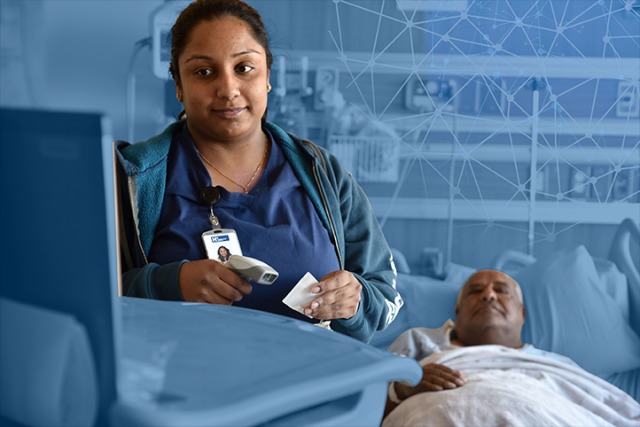
Naziim, a new nurse at Humber, was familiar with mandatory and annual courses to be completed in health care, such as emergency codes, confidentiality, and hand hygiene, but when ‘bariatric sensitivity training’ was offered as a core course, she was interested in learning more. “The more I learn, the more I want to learn,” says Naziim. “I appreciate the value of a 15-minute online education session that provides me with facts and information I can use every day – not just professionally, but also in my personal life,” she says. “I see obesity differently. There’s less judgement and I can also educate my children, my family and friends, about being sensitive and compassionate to those suffering with the disease.”
Humber becomes the first hospital in Canada to recruit a humanoid robot
As a result of her online learning and ongoing training, Naziim learned that Humber not only encourages staff and visitors to be sensitive to patients receiving treatment, but better understands how that patients suffering with obesity may feel while navigating their health journey and how to be supportive.
“The hospital’s bariatric care clinic delivers outstanding care and service to our community and beyond. Offering our staff online bariatric sensitivity training is just on example of our commitment to offer cost-effective development opportunities that reflect the hospital’s values of compassion, professionalism and respect for all of our patients,” says Scott Jarrett, Humber River Hospital’s Vice President of Patient Services.
Helen Reilly is the Senior Writer & Communications Specialist at Humber River Hospital.