
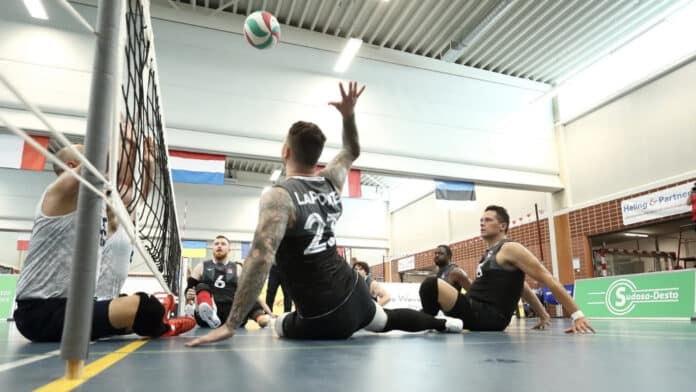

After waking up from an induced coma, Johnathan Laporte was met with a life-altering decision: keep his leg and face long-term complications, or undergo a major amputation to preserve his future health.
Just days earlier, he had believed his life was over. Caught in a devastating motorcycle accident in late 2024, Johnathan had called his wife to say goodbye. “I didn’t think I was going to make it,” he recalls. “I had made peace with dying.”
But fate — and a passing paramedic who stopped to save his life — had other plans.
Once stabilized, doctors advised that losing the majority of his leg was the best path forward. “I was so focused on keeping my knee, but then someone I knew, a friend in treatment at St. John’s Rehab, sat me down. He helped me understand the reality. He had been through it himself. That changed everything.”
For Johnathan, it wasn’t just about hearing the medical facts — it was about seeing someone who had lived it. That peer support became a turning point. “It helped me realize this wasn’t the end. Now, I want to be that person for someone else.”
Just eight months post-amputation, Johnathan defied the odds by making Team Canada’s Paralympic volleyball team. “I grew up with sports — hockey, basketball, going to the gym — but volleyball? It was never really my thing. Now, it’s my outlet, my community, and where I feel most proud.”
The path hasn’t been easy. He speaks candidly about the physical toll of adapting to a prosthetic. “People don’t realize how exhausting it is just to move around. I sweat like crazy — it’s a full-body workout every day.”
Coming from a family with a history of addiction, Johnathan made the conscious decision to avoid pain medication as much as possible. “I didn’t want to go down that road. I’ve seen how easily people fall into dependency. That wasn’t going to be my story.”
Today, Johnathan credits much of his healing and growth to the team and community at Sunnybrook’s St. John’s Rehab. “There’s just this unspoken understanding here. It’s a place where people get it. Where you don’t have to explain your pain.”
Though the days vary — some good, some not — his perspective is unwavering. “There’s always someone out there who has it worse. I remind myself I’m lucky to be alive. And if I’m here, I’m going to tell my story.”
“Life’s too precious to take for granted.”