


Researchers find mechanism that fosters development of neuroendocrine prostate cancer, identify a dual-drug treatment that slowed tumour growth in lab tests
A new study has uncovered promising therapeutic strategies against one of the deadliest forms of prostate cancer.
McGill University researchers at the Rosalind and Morris Goodman Cancer Institute (GCI) identified a mechanism driving neuroendocrine prostate cancer, a rare and highly aggressive subtype for which there currently are no effective treatment options.
Findings published in Genes & Development show that prostate tumours in mice became more aggressive when the protein ERRγ was lost, while restoring its production in human cancer cells reversed this effect.
Prostate cancer is the most commonly diagnosed cancer among men in Canada. Tumours that stop responding to hormone therapy evolve into neuroendocrine prostate cancer in about 15 per cent of patients, according to past research. After this shift, life expectancy typically falls below 18 months.
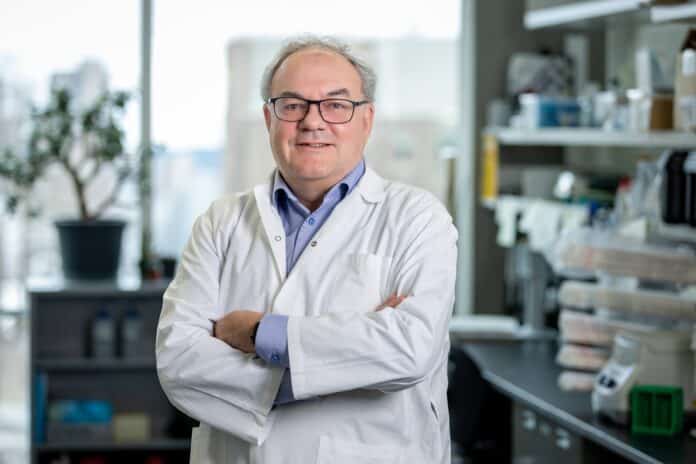
“Therapy resistance remains one of the biggest challenges in cancer treatment, and prostate cancer is no exception,” said lead author Vincent Giguère, Professor in McGill’s Department of Biochemistry and GCI researcher. “Our findings highlight ERRγ as a promising new therapeutic target.”
Existing drugs show promise when ERRγ is lost
The researchers used advanced genetic and metabolic analysis to understand how losing ERRγ drives tumour growth. Their investigation revealed that two genes linked to cancer become overactive when ERRγ is missing.
As drugs that block these genes already exist for other cancers, the team tested two of them in mouse and human prostate cancer cells. When combined, the two drugs slowed the cancerous growth far more effectively than either drug alone.
“These findings have major clinical implications,” said Giguère. “By targeting the genes that take over when ERRγ activity is low or lost, we open the door to new treatment strategies for patients who currently have few options.”
Understanding why ERRγ function becomes impaired in the first place is still being investigated, he added.
Protein acts as brake on tumour progression
ERRγ, previously known for its role in energy metabolism, appears to act as a brake that prevents prostate cancer from advancing.
Preclinical findings led by first author Ting Li, a post-doctoral fellow in Giguère’s lab, have revealed that neuroendocrine prostate cancers have much lower levels of ERRγ than other types of prostate tumours. Removing the protein in mice sped up tumour progression, while reactivating the protein in human prostate cancer cells reversed the process, confirming its protective effect.
About the study
“ERRγ impedes neuroendocrine prostate cancer development” by Ting Li and Vincent Giguère et al., was published in Genes & Development. The study was conducted in collaboration with Prof. Jin-Jian Lu of the University of Macau and supported by the Canadian Institutes of Health Research, the Terry Fox Research Institute, the Cancer Research Society, Fonds de Recherche du Québec – Santé and Défi Canderel.