

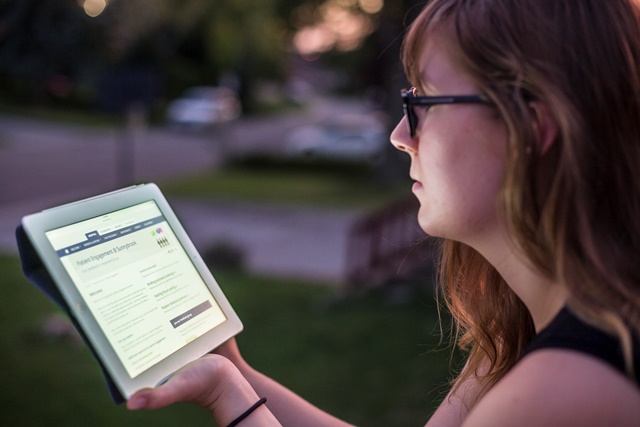
How does a hospital, with patients from across Ontario, initiate a dialogue with patients and families, both during their hospital stay and beyond? For #Sunnybrook, the answer was as simple as looking online.
With a strong social media presence, Sunnybrook began to reach out to patients and their families online. The hospital’s 26,000 Twitter followers and others were invited to offer their opinion on a variety of issues impacting the #patient experience at Sunnybrook. A special section of the website, www.sunnybrook.ca/engagement, has been dedicated as the hospital’s virtual town hall.
The issue of caller ID, and whether or not the hospital should have ‘Sunnybrook’ identified as an incoming caller, was an ideal engagement issue. Due to a sense of privacy, calls from the hospital appeared as ‘Unknown Name’, which made sense when caller ID was first introduced on home phones. The logic was to maintain a patient’s privacy in a home where other members of the household may be unaware the person was a patient at the hospital.
MORE: IMPROVING CARE FOR ELDERLY PATIENTS
With the mass proliferation of cellphones in the past few years, people began ignoring calls from an ‘Unknown Name’ and as a result were missing information such as clinic appointment times. To settle the issue, Sunnybrook took to its online community and asked a simple question: “Are you happy with the call appearing as ‘unknown’ or would you prefer to know the call is coming from Sunnybrook Hospital?” Over 85 per cent of respondents said they would prefer to know the call is appearing from Sunnybrook. Based on this feedback, calls are now identified as “Sunnybrook Hospital”.
“Reaching out online seemed to make the most sense for our organization,” says Craig DuHamel, Vice President Communications and Stakeholder Relations at Sunnybrook. “About 65 per cent of our patients live outside of Toronto and it seemed unreasonable to ask them to come in for a meeting. This way, they can engage on a topic on their own time, from the comfort of their own home.”
MORE: WORLD’S FIRST TAVI PROCEDURE ON PREGNANT PATIENT
Sunnybrook has asked its #virtual community to weigh in on issues such as whether or not the hospital should build shelters for smokers, to asking people their opinion on redesigning the main entranceway to its busiest campus.
Feedback from the online engagement is provided to those areas internally who will benefit most from the information. The results are also shared with the Senior Leadership Team, who use the information collected to help inform decisions.
“Patients appreciate us asking their opinions, and it’s quick and easy to enter the debate,” says Sivan Keren Young, Manager of Sunnybrook’s web communications team. “This is our modern-day virtual town hall and we’re getting tangible results from putting patients first.”