

HN Summary
• Sunnybrook’s Accessible Care Pregnancy Clinic provides individualized, fully accessible care for people with physical disabilities—from preconception through postpartum—ensuring patients are active participants in their care decisions.
• Integrated partnerships and early intervention, including trauma recovery programs and community connections, help patients access reproductive health resources and continuous care.
• Research, national guidelines, and global collaboration are expanding knowledge and improving outcomes, advancing equitable pregnancy care for people with disabilities.
When Diana Drake was injured in an ATV accident, she assumed her hopes of becoming a parent were over. “I was paralyzed and broke my back in two places,” says Diana. “My life was turned upside down.”
Diana says some of the thoughts racing through her mind included “Will I ever walk again? Will I be able to use the washroom on my own?” The one that she kept coming back to was “Will I be able to have a baby?”
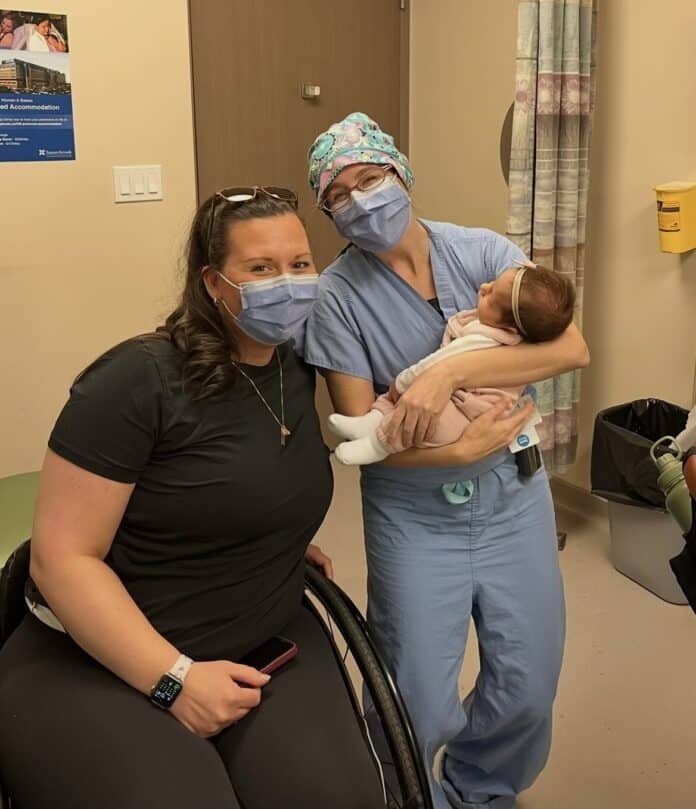
Five years after the accident, Diana did become pregnant, with care and support from Sunnybrook’s Accessible Care Pregnancy Clinic. Her experience demonstrates the impact of specialized, individualized care for people with physical disabilities. Now, she’s pregnant for the second time and excited to make Ryan a big sister.
The clinic is the first in Canada to care for patients with physical disabilities of all types, from preconception planning, pregnancy, labour and delivery, and postpartum care.
“Disabilities can present differently at different times, and can be unpredictable in nature,” explains Dr. Anne Berndl, Director of the Accessible Care Pregnancy Clinic at Sunnybrook, adding the clinic is fully accessible to all patients, including those who use mobility devices or aids. “Our focus is on individualized and comprehensive care – we understand that every pregnant person is different and work with patients to make a pregnancy care and birth plan based on their needs.”
For Diana, individualized care meant discussing her priorities with Dr. Berndl, with both eventually deciding that a scheduled Cesarean section would be best. Diana also met with several members of the wider care team, including an anesthesiologist who performed an ultrasound and MRI to see if an epidural, versus general anesthesia, would be possible. While she wasn’t awake for her delivery, Diana notes, “I was a part of the discussion all the way through.”
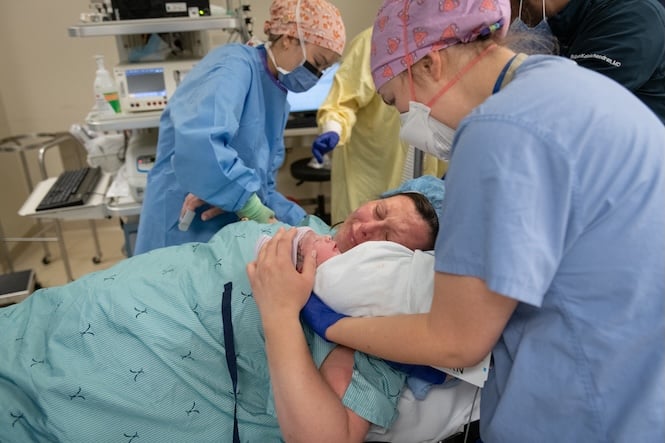
Dr. Berndl explains that the patient is at the centre of the care team and meets in advance with specialists, such as anesthesia, breastfeeding support, and hematology, to ensure a safe pregnancy and delivery while respecting the patient’s preferences.
The Accessible Care Pregnancy Clinic has recently focused on extending its impact by ensuring those affected by a traumatic injury are connected to reproductive health resources during recovery. By embedding pre-pregnancy planning discussions and resources into trauma recovery within Sunnybrook’s Tory Trauma Program, patients are aware of their choices and reproductive supports available at the time of their injury.
In addition, a partnership with Vibrant Community Health is helping to ensure clients with disabilities, many of whom lack access to primary care providers, are not lost in the system. The two-way system connects Vibrant clients with reproductive information and pregnancy care at Sunnybrook and ensures patients who deliver at Sunnybrook receive accessible primary care at Vibrant after giving birth.
Together with Holland Bloorview Kids Rehabilitation Centre, Sunnybrook is collaborating to encourage early conversations with young people about fertility and parenting, so they know what’s possible and feel confident in their choices as they transition to adult care.
Beyond the services at Sunnybrook and locally within Toronto, Dr. Berndl is passionate about ensuring clinicians across Canada and beyond have the tools they need to care for pregnant patients with disabilities. In addition to authoring national guidelines on disability and pregnancy, she recently published the largest data set of pregnancy outcomes in people with spinal cord injuries, gathering information from 33 countries in four languages. Funded by the Ontario Neurotrauma Foundation, Dr. Berndl says the information will help healthcare providers move toward the goal of more personalized medicine and increased quality of care for those living with disabilities.
When Diana thinks of her experience at Sunnybrook, she admits her mind goes to those who don’t have access to the specialized care she has experienced. “My heart aches for those who have physical disabilities and don’t have the option for this individualized and equitable care. I know how fortunate I am. Every concern was listened to and heard, and my needs were met. I have a happy, healthy three-year-old and soon-to-be big sister who is the light of my life.”