

HN Summary
• Colorectal cancer is rising among younger adults, prompting UHN researchers to investigate causes and advance early detection and treatment strategies.
• A patient diagnosed at 41 highlights how symptoms can be subtle or misattributed, reinforcing the importance of awareness and routine screening.
• Ongoing research into targeted therapies and immunotherapy is improving outcomes and offering new hope for patients with colorectal cancer.
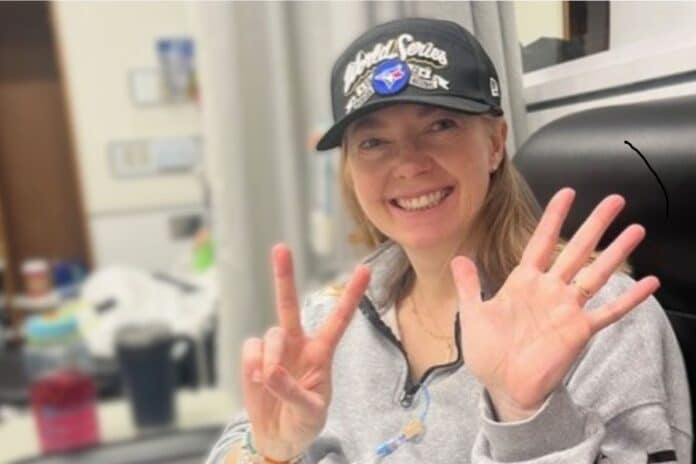
Ashley Wiley had just turned 41 and was raising four young children when a Stage 3 colorectal cancer diagnosis changed everything.
“I didn’t have any risk factors,” says Ashley, now 42. “I’m active, I eat healthy, I felt well… nothing in my brain allowed me to think this was possible.”
Colorectal cancer has traditionally been associated with individuals over the age of 50. However, a growing number of younger adults are now being diagnosed, often with more aggressive forms of the disease. This shift has prompted researchers at University Health Network (UHN) to investigate potential causes and develop new approaches to treatment and prevention.
Researchers are exploring a wide range of factors that may be contributing to this rise, including diet, obesity, gut health, and environmental exposures such as microplastics. While no single cause has been identified, the complexity of the issue highlights the importance of continued research.
“Because the exact reasons are still not fully understood, it’s important to continue investing in research,” says Dr. Enrique Sanz Garcia, a medical oncologist at Princess Margaret Cancer Centre. “This will help us better understand why this is happening and support the development of public health strategies that may reduce risk.”
Ashley’s diagnosis came after experiencing what she believed to be a common post-pregnancy symptom—blood in her stool. Like many others, she initially attributed it to hemorrhoids. It wasn’t until she sought treatment that a colonoscopy revealed the presence of cancer.
“My GP said it was almost like we found this by mistake,” she says. “My concern is how many other women are out there like me, chalking it up to the normal side effects of having a child.”
Dr. Sanz Garcia notes that colorectal cancer can present in a variety of ways. Some patients experience changes in bowel habits, including alternating diarrhea and constipation, while others may notice visible blood in their stool. In more advanced cases, symptoms such as weight loss, fatigue, or decreased appetite may develop. However, many individuals in the early stages of the disease may not experience any symptoms at all.
Screening plays a critical role in early detection. Tests such as the Fecal Immunochemical Test (FIT), which detects small amounts of blood in stool, can help identify cancer or pre-cancerous conditions before symptoms appear. Regular screening, particularly every two years, is considered a reliable method for early detection.
Following her diagnosis, Ashley began treatment within weeks, starting with radiation therapy at Princess Margaret Cancer Centre, followed by chemotherapy. Imaging had revealed that the cancer had spread to the outer layer of the rectum, confirming a Stage 3 diagnosis. Despite the severity, she responded well to treatment and is now undergoing a non-operative management approach, which allows her to avoid surgery and maintain a high quality of life.
She continues to undergo regular imaging every three months to monitor her progress. Reflecting on her experience, Ashley recalls the moment her surgeon offered reassurance.
“I remember the surgeon said, ‘We found a tumour… and we’re going to cure it,’” she says. “Those words were really important, even as my world started spinning.”
Ashley credits her care team with helping her navigate the experience and maintain confidence in her recovery.
“The professionalism, efficiency, and complete care from the team have allowed me to relax into what is now a really good quality of life,” she says. “That’s why we went through all the treatments—so I could have a full life with my family.”
Her experience also reflects the growing impact of research in shaping new treatment options. UHN researchers are actively developing targeted therapies and immunotherapies designed to improve outcomes for colorectal cancer patients. This includes work focused on common genetic mutations, such as KRAS, which have historically been difficult to treat.
New immunotherapy approaches are also being explored for patients who do not respond to standard treatments. While still in development, early results are promising and may lead to broader treatment options in the future.
Ashley’s participation in fundraising efforts for cancer research reflects her appreciation for the role research has played in her care.
“The reason I’m in the position I’m in is largely because of research,” she says. “People who had this diagnosis before me had very different outcomes. Their experiences helped create the path my team could take.”
As research continues, the focus remains on improving early detection, expanding treatment options, and understanding the underlying causes of this shift in diagnosis patterns among younger patients.