HomeNews & TopicsFacilities Management and DesignBC’s major surgical services are getting a massive upgrade

BC’s major surgical services are getting a massive upgrade

Published on

By Carrie Stefanson

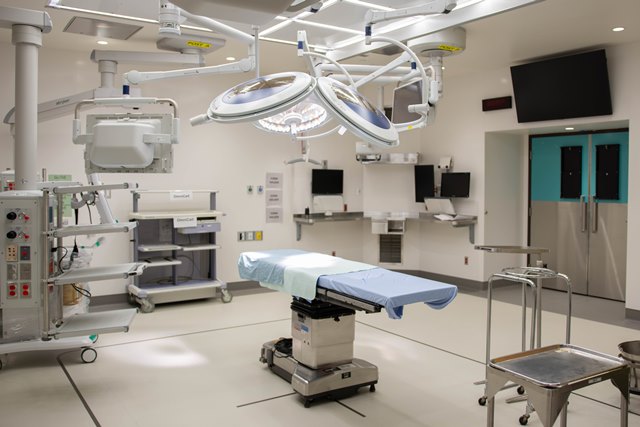
In about a year, Vancouver General Hospital’s Phil and Jennie Gaglardi Surgical Centre will expand for more surgeries to be performed with less wait times and cancellations. The expansion will add 16 new state-of-the-art, universal operating rooms and a 40 bed pre- and post-operative care unit.

Building universally-designed operating rooms allows for flexibility for a variety of surgeries – any case, any room. This means less waiting for rooms or moving patients around when emergency cases arise, which is 50 per cent of VGH’s surgical activity.

The project includes a new communication system to track patients, equipment and instruments across two operating floors, and upgraded infrastructure including heating, ventilation, air conditioning, electrical and plumbing. Staff at Vancouver General Hospital were instrumental in the design and construction of the new surgical suite.

Technology leading the way in the future of surgery

The expansion includes a new system to track patients via a wristband. Infrared readers in the ceiling follow patients as they move from admitting to the pre-operative area, the operating room and onto the post-operative/recovery area. Family members can track their loved one on a monitor in the waiting room. Information is anonymized so patient confidentiality is maintained.

The Perioperative Patient and Asset Tracking provides “at a glance” tracking for surgical patients and equipment, providing 1,300 staff, clinicians, and physicians with 24/7 real-time information via workstations, big screen monitors, and mobile devices. This constant source of up-to-date information helps care teams better coordinate their work and provide the best patient care possible.

The anesthetic gas lines.

Capturing anesthetic gas

The new surgical suite will also include technology to capture the anesthetic gases used to sedate patients during surgery.  A 2018 study in The Lancet by VGH surgeon Dr. Andrea MacNeill found anesthetic gases have a significant effect on the environment.

Other hospitals in British Columbia are looking at implementing similar technology as they build for the future.

Carrie Stefanson is Public Affairs Leader at Vancouver Coastal Health.


Latest articles

New approach opens door to better-targeted treatments and faster drug discovery for complex diseases

McGill researchers have developed an AI tool called SIDISH that identifies high-risk cancer cells driving aggressive disease, enabling more precise and targeted treatment strategies. By linking single-cell data with patient outcomes, the tool can predict disease progression and simulate responses to potential drug targets, helping accelerate drug discovery and repurposing. While still in development, SIDISH shows promise for advancing personalized cancer care and improving outcomes across multiple tumour types.

Canadian Cancer Society urges lowering colorectal cancer screening age to 45

The Canadian Cancer Society is urging provinces to lower the colorectal cancer screening age from 50 to 45, citing rising rates among younger adults and evidence that earlier screening could prevent over 15,000 cases and 6,100 deaths. Younger patients are more often diagnosed at advanced stages, making early detection critical. Expanding access to simple screening tools like FIT tests could significantly improve outcomes and save lives.

Unleashing natural killer cells against cancer

Researchers at McGill University have developed a new strategy to enhance natural killer (NK) cells, enabling them to better penetrate tumour defenses and destroy cancer cells. Using small-molecule drugs to temporarily boost NK cell activity—rather than permanent genetic modification—the approach showed strong results against multiple hard-to-treat cancers in preclinical studies. The scalable, ready-to-use therapy could make immunotherapy faster, safer, and more accessible, with future clinical trials planned for aggressive cancers like acute myeloid leukemia.

Doctors report false health information, lack of health data sharing put patient care at risk

A new CMA survey reveals major risks to patient care in Canada, with 99% of physicians reporting that disconnected health systems limit access to critical patient information and nearly half witnessing serious adverse outcomes as a result. At the same time, 97% of doctors say they have intervened to address harm caused by false or misleading online health information, including AI-generated advice. The findings highlight the urgent need for integrated digital health systems and stronger efforts to promote reliable health information.

More like this

Innovative shower room design shown to ease distress in people with dementia

HN Summary • The Specialized Dementia Unit at University Health Network’s Toronto Rehab University Centre...

HHS reduces food waste to reduce greenhouse gases

HN Summary • Measuring and targeting emissions: Hamilton Health Sciences identified food as its second-largest...

New multi-sensory room brings calm and comfort to children and youth

The moment a child steps inside the room, soft lights twinkle across the walls,...

Building a greener, safer hospital

HN Summary • Sustainable, Low-Impact Design: The new West Lincoln Memorial Hospital (WLMH) in Grimsby,...

First-in-Canada emergency department design redefining patient experience

Emergency department (ED) wait times are more than just a metric – they are...