

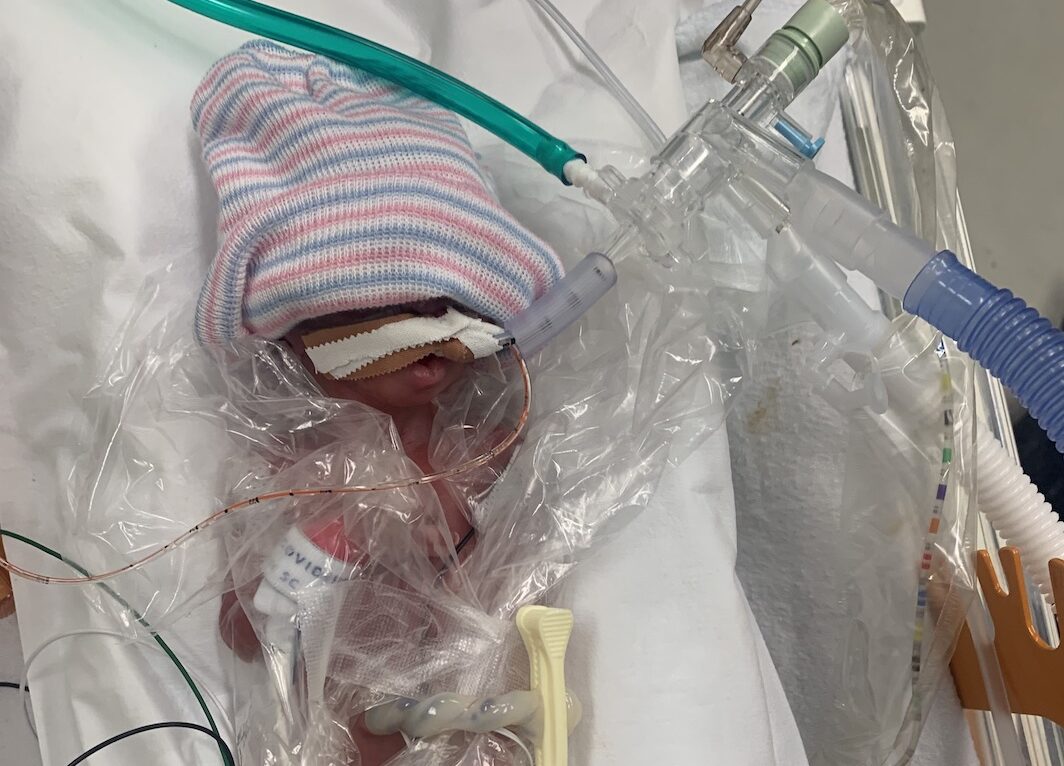
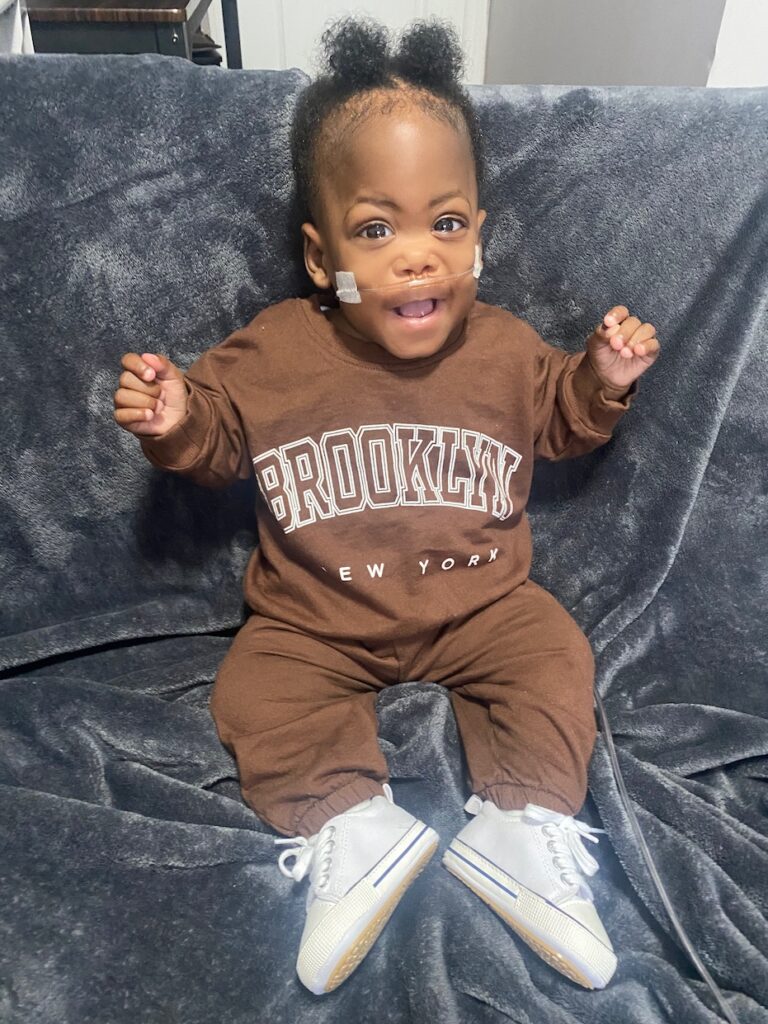
Shylee giggles enthusiastically, surrounded by toys, as her mom packs a diaper bag. “There’s a lot to cart around when we go out – her oxygen tank is the most important,” says Shanice, who looks proudly at her daughter, who was born at 24 weeks at Sunnybrook.
The pair are on their way to see the care team at Sunnybrook’s Neonatal Follow-Up Clinic. Shylee still uses oxygen for pulmonary hypertension and continues to smile as they hop in the car. Thankfully, their commute is just a ten-minute drive to a satellite clinic which sees patients in the Peel region once a month.
“Convenience-wise, it’s absolutely incredible,” says Shanice, who lives in Brampton and is grateful to have access to a clinic so close, with the same care team she’s known since Shylee’s four month stay in Sunnybrook’s neonatal intensive care unit (NICU). “The clinic has all of the same staff we’ve came to know – it’s reassuring knowing we have access to this expertise close to home.”
Babies like Shylee, born at less than 30 weeks, and those who had complicated stays in the NICU, are seen in person and virtually by the follow-up clinic. Two satellite clinics, in Whitby and Brampton, provide accessible care for those who don’t live close to the main hospital when it comes time for an in-person visit.
“Sunnybrook’s NICU isn’t a postal code unit,” explains Dr. Rudaina Banihani, Medical Director of the Neonatal Follow-Up Clinic and a Neonatologist and Developmental Behavioural Pediatrician. “Our NICU is a level three unit, which means we care for the most premature and sickest babies from across the province. This model of care, where babies and families are seen close to home, really sets us apart.”
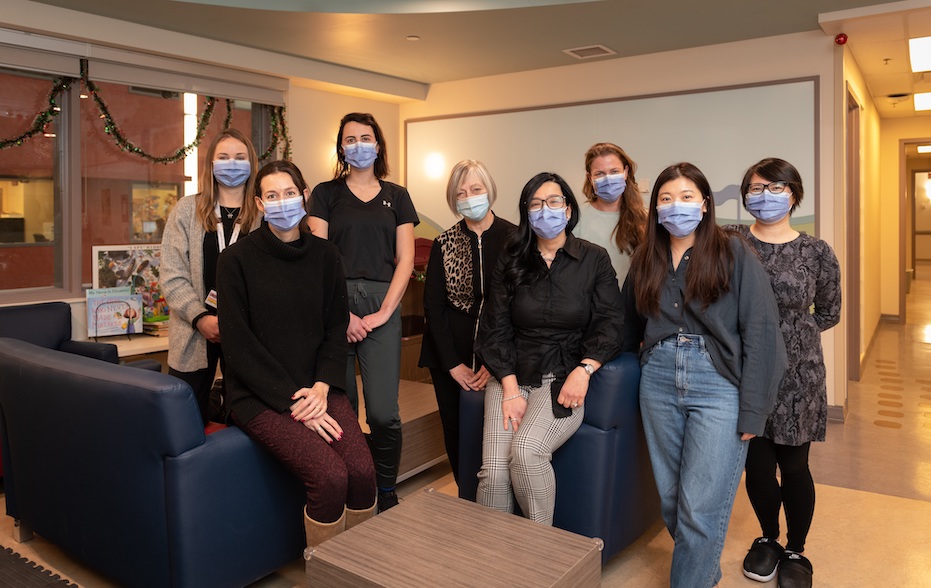
20221130 – Derrick Jackson Retirement is photographed at Sunnybrook Health Sciences Centre in Toronto, On. Wednesday November 30, 2022. (Photo by Kevin Van Paassen/Sunnybrook)
The model is longstanding, with the first satellite set up in the 1990s by Dr. Elizabeth Asztalos, a neonatologist with specialty in developmental pediatrics with the DAN Women & Babies Program. Satellite clinic visits comprise roughly 20 per cent of the clinic visits each month. The care team provide routine check-ins from the time a child is discharged from the hospital up until school age. Care in the clinic focuses on supporting each child’s developmental potential, by looking closely at motor skills, communication, engagement with the environment, and other important milestones. The clinic also prioritizes overall family well-being.
Dr. Banihani is quick to note the care doesn’t replace a child’s pediatrician, who are always the first line of call for acute care issues. That said, the team consults and collaborates with other health care professionals, such as pediatricians, to identify each child’s strengths and areas for growth.
The Dhaliwal family are big fans of the model of follow-up care. Ranvir was born at 29 weeks and is now a very active six-year-old and a “bright spirit who has so much energy”. At Ranvir’s age, visits focus on the transition to grade level schooling, learning skills and peer relationships to support academic success and enjoyment of learning, as well as friendship building.
“Relaxed, comfy and no stress – that’s what it’s like visiting the satellite clinic,” says Kiranpal, Ranvir’s mom. “I know we’re getting the developmental support we need, and it’s close to our house. For Ranvir, it’s a lot of fun as there are so many toys and he gets to play.”
The interdisciplinary team is comprised of physicians with a knowledge of neonatal and developmental care, occupational and physical therapists, speech and language pathologists, and a registered nurse. All care providers specialize in the care of preterm infants and strive to collaborate with each family.
“From feeding, to sleeping to toileting, we are focused on each child’s development related to their prematurity,” adds Dr. Banihani. “It’s fulfilling to meet families at different points in their child’s journey, from the hospital to starting school and beyond.”
For kids like Shylee and Ranvir, a visit to the clinic is all about play. “It looks like a play place – it’s bright and colorful. And we get to see familiar faces who truly support and cheer us on,” says Shylee.