

By Dr. Karthika Devarajan
I have always been interested in Global Health, but medical training takes up a lot of time in the beginning. I did some international work here and there, but eventually, I reached a point where my career was stable, and I wanted to try something new. Doctors Without Borders/ Médecins Sans Frontières (MS) has an incredible reputation for delivering good medical care where it is needed the most and I felt that I finally had the experience, but also still had the energy, to work with them. A colleague covered my practice and I went to work as an MSF obstetrician gynecologist for 6 weeks, long enough to do something worthwhile, but short enough not to derail my practice at home.
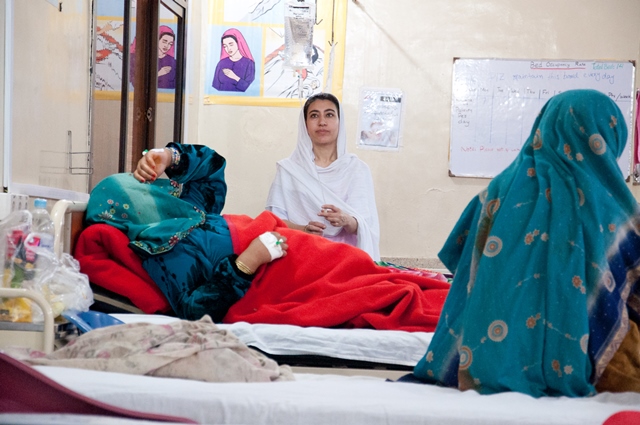
I was posted to Timergara, a very traditional community high in the mountains of Northern Pakistan. Going to Timergara feels like going back in time in some ways. The living is hard and having a baby can be dangerous business. At first, the new culture was disorienting. It was unnerving to work without the technology, expensive drugs and support of the big teams that I was used to at home. Women would start bleeding during labour at home, and it would then still take hours for them to get to us. I would operate, terrified that they wouldn’t make it, worried about how they would do post-surgery without an ICU or individual nursing care. To my everlasting astonishment, these women made it more often than not, determined to get home to their other children. The resilience of the human mind and body is truly a kind of magic.
As time went on, I started to trust that we had what we needed to do a good job. Most pregnant women are young and healthy. It was humbling to see that a basic OR and some essential drugs were all we really needed to save their lives. There were people we couldn’t save and situations that shocked me, but there were also so many things that went so much better than I could possibly have imagined. So many people who did so remarkably well despite all odds – and that put the final balance hugely into the positive. I cannot describe how powerful it was to know that each day really, truly meant something. I realized all over again what a gift my surgical training has been and I have a new appreciation for the immense freedom that has defined my own life.
I met many new people, both local and international, and these easy friendships have helped enrich the way I see the world. The local staff were unfailingly kind and treated me with nothing but courtesy and warmth. It is really not so difficult to come for a short time, work hard and then disappear back into a comfortable first world life, but the local staff stay and manage these struggles day in and day out for years. I have no words for their courage and commitment.
The last baby I delivered in my time there sums up everything I loved about working for MSF. All four of Mariam’s babies had died. All of them had tried to enter this world some way other than head down and the midwives had not been able to deliver these children alive. For her fifth delivery, she made the four hour trek through the mountains to our hospital. I examined her and a tiny hand grasped my finger. We did a c-section and delivered a gorgeous, healthy girl. She had an oddly shaped uterus that had probably forced all her children into their dangerous sideways stances. A c-section, just a basic procedure, was all she needed to take her baby home alive.
As I left the ward that night, I saw Mariam sitting in her bed, gazing at her little baby with such wonderment and I remembered what sparked my love of obstetrics in the first place. Whatever your culture or social strata, the love of a mother for her baby is so remarkably constant. The women in Timergara are no different. They want to go home with a healthy baby the same as any woman in downtown Toronto. Having a baby is having a baby, no matter where you are. Healthy mothers raise healthy children and this has benefits that affect the whole family, community and beyond. As obstetricians and midwives, we are so lucky to able to help give people this gift of a safe delivery all over the world.
Dr. Karthika Devarajan is an obstetrician at North York General Hospital (Toronto).