
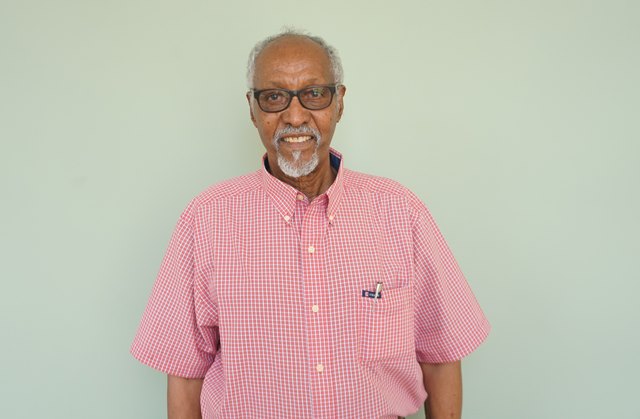

When Mohamed Yusuf walked into Michael Garron Hospital (MGH) to receive his total knee replacement surgery, he never imagined he would walk out of the hospital the very same day to recover at home.
The 62 year-old who immigrated to Canada from Somalia in 2005 was plagued by bad knees from arthritis that caused him to walk sideways and slightly bent over. He attributes the knee problems to running through the African landscape in his youth.
“I feel so happy that I can stand up straight again and walk without any problems,” says Mohamed. “I can do the things I love again.”
Mohamed was one of two patients who participated in the same-day discharge pilot program for total joint replacement surgery. The program was established by Dr. Paul Wong, an orthopedic surgeon at MGH. The idea for this program came from a study conducted by Dr. Wong and his team to educate joint replacement patients on recovery strategies and reduce hospital stays.
The study, “Reducing length of stay for total knee arthroplasty through enhanced patient education” won a Lead Wisely award at MGH’s annual EPIC Research and Innovation Fair last year.
Total joint replacement is an effective treatment for people who have end-stage arthritis of the hips or knees. The patient population that usually requires this surgery is commonly aged between 50 and 85. The surgery replaces the diseased hip or knee joint with a prosthetic one.
Dr. Wong’s study originally aimed to reduce hospital stays from three days to two and a half days, but the research showed that same day discharge was possible. Early discharge is not only safe, but also leads to higher patient satisfaction and lower complication rates. Dr. Wong also found that it is essential to reduce narcotic use. The program was recognized by the Health Standards Organization as a Leading Practice, and published online earlier this month.
“We found that by eliminating some of the barriers that kept people in the hospital longer, they were able to go home much sooner and recover more quickly,” says Dr. Wong, who has been an orthopedic surgeon at MGH for over 20 years.
Over the span of his career, Dr. Wong has completed thousands of joint replacement surgeries. Based on his experience and the findings of his team’s study, Dr. Wong found the two biggest barriers were whether or not the patient had home support and the patient’s pre-conception of what is expected before the surgery.
“We usually see patients coming to the hospital for joint replacement surgery with the mindset that they are sick and need to be in the hospital for a very long time. We found that patients with this mindset took a much longer time to recover and transition home,” says Dr. Wong.
“By changing the culture of joint replacement and empowering patients to take control of their own health, I think we will be able to do more same day discharges, in the future, for those who qualify.”
Patients who qualify for same day discharge surgery would have guaranteed at-home support during their recovery (whether from family, friends, or outside services) and have no major pre-operative medical conditions. They tend to be on the younger side of the typical age range. Ultimately, the key predictor of successful same day discharge is a patient’s motivation and determination to take control of their own health and recovery.
Same day discharge total joint replacement is not a new concept. Over the past few years, there’s been a resurgence. In the US, approximately 5 % of all total joint replacements are discharged the same day. Dr. Wong believes that its popularity will continue to rise in Canada, and will become routine practice in our near future.
“Same day discharge isn’t for everyone,” says Dr. Wong. “As we did with this pilot, we will continue to carefully screen patients who meet the criteria for any future same-day discharge surgeries.”
Mohamed says his recovery took about 15 days in addition to five physiotherapy sessions at an offsite health centre.
“Dr. Wong has changed my life,” says Mohamed with a smile. “Everyone from the hospital who helped me with my recovery was wonderful. Every week someone would call to see how I was doing.”
Mohamed is currently looking forward for his next joint replacement surgery on his other knee. He is excited at the prospect of finally ditching his walking cane once and for all and hopes he’ll be able to travel again.
Ellen Samek is a Communications Assistant at Michael Garron Hospital, Toronto East Health Network.