

Nearly 10% of Canadians report using cannabis for medical purposes, yet only 18% do so with a medical authorization and the support of a healthcare provider. This gap underscores a persistent disconnect between patient behaviour and clinical oversight, which is shaped in part by stigma, access barriers, and uncertainty around proper use. As a result, clinicians are increasingly looking for practical, evidence-informed guidance on how cannabinoid-based therapies can be integrated into care with clarity, safety, and confidence.
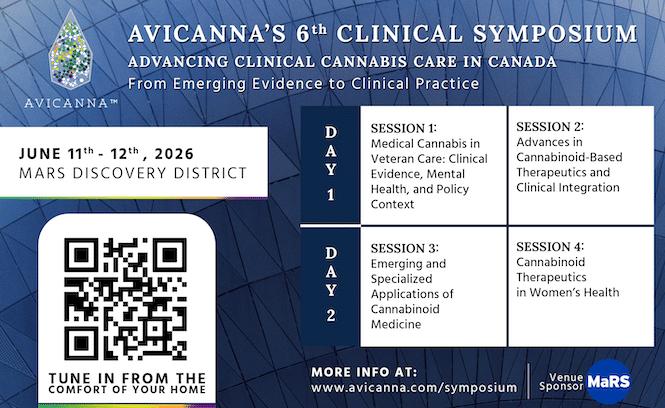
This June 11-12, Avicanna Inc. will host its 6th Annual Medical Symposium on cannabinoid-based medicine at the MaRS Discovery District in Toronto, bringing together clinicians, researchers, and interdisciplinary experts to examine the current state of cannabinoid-based therapies. The program will emphasize treatment planning across complex conditions within unique patient populations, consider safety and risk factors, and provide opportunities for direct engagement with experts through panel discussion and case-based learning.
Bridging Evidence and Clinical Practice
The program is designed to move beyond theory, focusing on how clinicians can apply cannabinoid-based therapies within everyday care. Sessions were designed by an expert panel to cover a range of topics. Sessions are designed to support clinicians with practical prescribing considerations, dosing and titration approaches, managing multi-symptom and comorbidities, understanding emerging translational research in cannabinoid science and applying evidence within real-world patient care.
Day 1 – Session 1 Advances in Cannabinoid-Based Therapeutics and Clinical Integration
Day 1 – Session 2 Medical Cannabis in Veteran Care — Clinical Evidence, Mental Health, and Policy Context
Day 2 – Session 1 Emerging and Specialized Applications of Cannabinoid Medicine
Day 2 – Session 1 Cannabinoid Therapeutics in Women’s Health and Palliative Care
In addition to plenary sessions, interactive workshops will provide practical tools clinicians can apply immediately.
Presentation Highlights
• Dr. Evan Cole Lewis, neurologist and clinical neurophysiologist at The Hospital for Sick Children and the University of Toronto, will present case-based dosing and titration strategies in adult and pediatric neurology. His session walks through complex neurological presentations including epilepsy, chronic headache, concussion, and functional neurological disorder demonstrating how structured titration approaches can support safer and more effective cannabinoid use across diverse populations.
• Dr. Hance Clarke, Director of Pain Services at Toronto General Hospital (University Health Network), will explore how cannabinoids may be considered within multimodal pain management strategies and discuss documentation, monitoring, and patient selection within evidence-based pain frameworks.
• Dr. Matthew Hill from the University of Calgary’s Hotchkiss Brain Institute will explore endocannabinoid signaling, stress, fear, and anxiety, offering clinicians a mechanistic framework that informs clinical reasoning when considering cannabinoid-based therapies for patients presenting with anxiety, trauma-related symptoms, and sleep disturbance.
• Michael Koehn, MACP, RCC, a Registered Clinical Counsellor and Co-Principal Investigator of the Maverick Phase 2 Study, will present novel approaches where cannabinoid-based medicines may serve as adjunctive support within harm reduction strategies for vulnerable populations. His session examines cannabis through the lens of substance use recovery, recidivism mitigation, and practical patient support within complex psychosocial contexts.
• Erin Mignault, NP-PHC, will share extensive clinical experience integrating medical cannabis into primary and complex care, with particular attention to individualized patient assessment.
• Dr. Elizabeth Thompson, a researcher at the University of Saskatchewan focused on concussion, neuroinflammation, and pain, will discuss emerging cannabinoid research in contact sport populations and the implications for recovery and symptom management. Her work includes participation in an NFL/NFLPA-funded clinical trial examining the therapeutic potential of cannabinoids in elite contact sport athletes.
• Dr. James MacKillop, a clinical psychologist and researcher at McMaster University and St. Joseph’s Healthcare Hamilton, will present on the state of the evidence for medical cannabis in Canada, examining what current research tells us, where knowledge gaps remain, and how clinicians can interpret evolving data within real-world practicw.
Invitation to Symposium
Join other like-minded healthcare professionals at Avicanna’s 6th Medical Symposium: Advancing Clinical Cannabis care in Canada, From Emerging Evidence to Clinical Practice this June 11-12, 2026 by registering at the link below. In-person and virtual attendance is complimentary.
https://www.avicanna.com/symposium/
By Dr. Karolina Urban, Executive Vice-President, Medical Affairs, Avicanna Inc.