

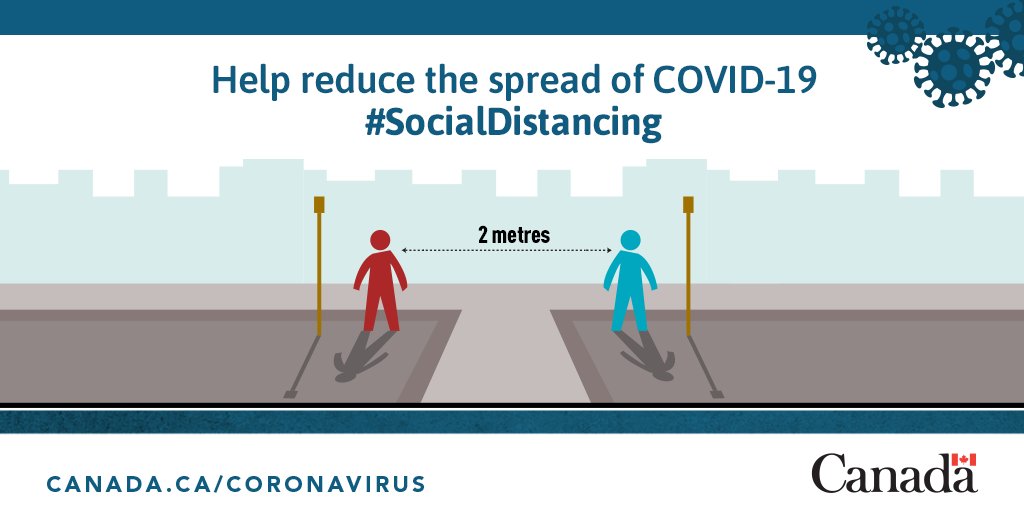
A new modelling paper, using data from Ontario, indicates that dynamic physical distancing and other measures could help maintain health system capacity and prevent intensive care units (ICUs) from becoming overwhelmed because of COVID-19, while allowing periodic psychological and economic breaks from restrictions. The paper is published in CMAJ (Canadian Medical Association Journal).
“Physical distancing and other public health measures can reduce COVID-19 spread, but once these measures are lifted, we’re at risk of an uptick in cases,” says Dr. Ashleigh Tuite, assistant professor of epidemiology at the Dalla Lana School of Public Health, University of Toronto. “Dynamic response measures that can be turned up and down in response to where we are on the epidemic curve provide a way to curb transmission while also providing periodic breaks and a chance to return to a more normal life.”
The authors modelled several strategies to flatten the epidemic curve, focusing on scarce ICU resources, which can quickly become overwhelmed, over a 2-year period. These include the following scenarios:
- Base case — with limited testing, isolation and quarantine and an estimated 56% of the population becoming infected, projections estimated 107,000 hospital admissions and 55,000 cases in the ICU at the peak of the epidemic.
- Fixed duration interventions — using physical distancing and case finding over 12 and 18 months substantially reduced the number of people infected, with varying results depending on how aggressive the implemented physical distancing measures were.
- Dynamic interventions — turning off and on interventions to respond to the current state of the epidemic was projected to be effective at reducing the proportion of the population affected at the end of two years. This could involve dynamic physical distancing, which would intermittently ease some restrictions to provide periodic psychological and economic relief. For example, when implemented dynamically over 13 months, the median overall attack rate was reduced to two per cent.
“There are likely going to be a series of ups and downs with dynamic interventions as transmission waxes and wanes,” says Dr. Tuite. “With our model, we show that we can modulate response measures so that we don’t overwhelm our health care system, while also attempting to lessen the societal and economic disruption of these measures.”
“Repeated outbreaks of COVID-19 will most likely occur because of reintroduction of infection from other countries until a vaccine is developed or we develop herd immunity in which much of the population has developed antibodies to the virus,” says co-author Dr. David Fisman, professor of epidemiology at the Dalla Lana School of Public Health.
“Mathematical modelling of COVID-19 transmission and mitigation strategies in the population of Ontario, Canada” is published April 8, 2020