

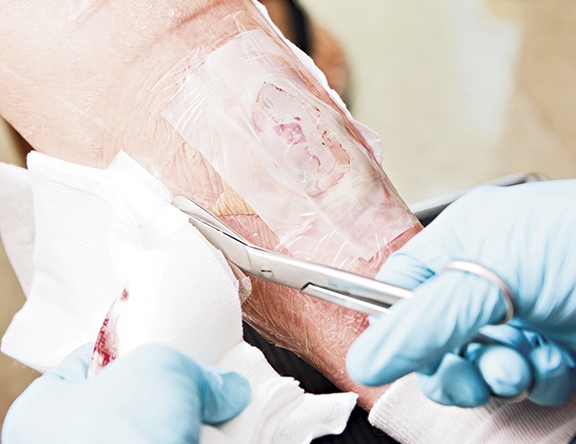

In 2026, the global wound care market is expected to grow to approximately $24 billion in volume and continue its growth through 2032 at a compound annual growth rate (CAGR) of approximately seven per cent. This positive streak will continue what has been a consistently growing annual metric over each of the last 5 years. In 2026, it is expected the United States’ share of the global market will comprise over 47 per cent, and well over half of the industry’s gross volume.
Even with U.S. dominance in the global wound care market, the rest of the world wound care is growing at what may be an even faster pace, with its potential to catch up one day soon. According to , “The continued escalation in global wound care demand is a result of a growing senior population, together with the expansion of improved wound care availability, as well as the adoption of higher wound care quality standards around the world.”
The global wound care industry is evolving as it strives to keep up with the increasing global demand for wound care supplies and expertise. Product innovation, artificial intelligence, efficient data management, improved supply chains and more are helping the industry keep up with global demand
In the year 2026, I believe the following 8 trends most likely to influence the global wound care industry. They include:
1) The growing influence of artificial intelligence on wound care.
2026 will be a significant year during which AI is more widely integrated into the practice of wound care. It has the potential to significantly improve wound care in the way it more efficiently analyzes types of wounds, recommends courses of treatment, tracks healing, prevents future wounds and more. Navazio notes that AI is based on a body of empirical information and that Gentell owns the largest database of wound care information in the world.
2) The hottest product in 2026 – honey-based wound care.
We predict that the most popular new wound care product in 2026 will be wound care made with Manuka honey. Manuka honey, from New Zealand, is the most pure and effective honey available. It is an ancient, natural remedy, that is poised to make a major comeback, in new forms of dressings and salves that are now FDA approved for wound care.
3) New trend: managing nutrition’s effect on wound care.
Although many health care professionals focus on bandages, antimicrobials and topical agents to heal wounds, an increasingly popular, state-of-the-art therapy recognizes the importance that nutrition plays in wound care, as well. For example, protein is a foundational nutrient in wound healing because it supports and enhances tissue growth, cell renewal and cell repair. Nutrition can stimulate the body in a number of positive ways to facilitate and expedite wound healing.
4) Global Wound Care CultureTM will expand in 2026.
We define Wound Care CultureTM as an integrated environment of shared beliefs, knowledge and practices that prioritize wounds and elevate their care and treatment. A Wound Care CultureTM advances wound care from merely treating wounds to prioritizing the entire process toward achieving evolutionary improvement in quality and overall patient care. These quality standards are rapidly expanding worldwide.
5) Vertical integration will bring down costs.
At one time, wound care consisted of a number of separated components including manufacturing, delivery, treatment, information management and more. By vertically integrating all the components, costs will be dramatically reduced while the quality, speed and personalization of wound care treatment will be greatly increased.
6) Outside economic influences potentially will have an effect on wound care.
Although the wound care industry is making great strides in making the cost of wound care more affordable, outside governmental, political and economic influences such as tariffs, taxes and inflation may have a counter-balancing effect on wound care pricing and availability.
7) Recognizing the dangers of skin substitutes, especially in long-term care.
Recently, the use of skin substitutes for wound care for seniors has been limited within Medicare coverage. In fact, the Office of Inspector General (OIG) stated in 2023 that the CMS doesn’t have enough research to distinguish the efficacy of different skin substitutes. Expect further disengagement as skin substitutes are declared inappropriate, if not outright dangerous, for use on wounds, especially for long-term care patients.
8) A growing trend towards preventing wounds before they occur.
The best wound care occurs when wounds can be prevented before they occur. 2026 will see growth in preventative measures. An example of this strategy’s success relates to recent years’ diabetes incidence diminishing. Experts believe that this is due to the increasing availability of tests and information relating to the prevention of diabetes. Reducing diabetes will mean a reduction in wounds relating to diabetes, benefitting more patients.
Wound care is becoming increasingly complex. Keeping up with the trends in a vertically integrated global environment is key to delivering optimal care and maintaining a competitive edge dedicated to improving the lives of more people around the world.
By David Navazio
David Navazio is President and CEO of Gentell, the largest vertically integrated wound care company in the world.