

By Andre Bertram
Heart disease is the second leading cause of death in Canada. According to the Public Health Agency of Canada’s Canadian Chronic Disease Surveillance System, about 1 in 12 Canadians aged 20 or over live with a diagnosed heart disease. Meanwhile, the health care industry continues to use the same tools to diagnose, monitor and treat the affliction in Canadians with little advancement in the field. My colleague Frank Nguyen and I both attended Danforth Collegiate Institute in Toronto, when Frank arrived home from school one day to find his mother at the bottom of the stairs with a broken leg. Doctors determined a minor cardiac event had caused the fall, nevertheless there was little to no empirical information from the event to make a concrete diagnosis – which is often the case when Canadians experience cardiac issues. From this event, HeartWatch was born.
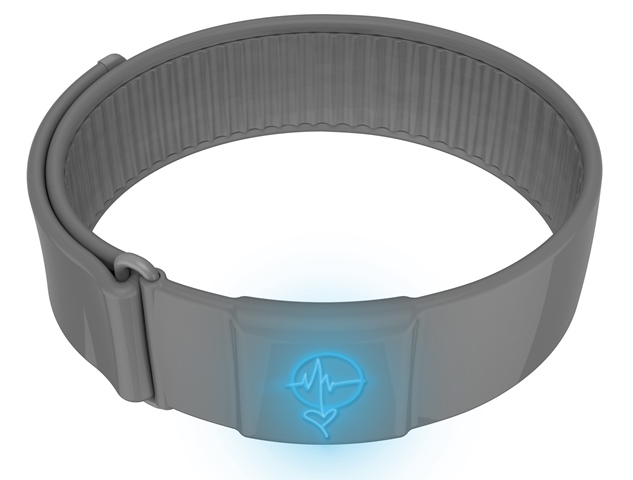
HeartWatch is a clinical-quality ECG monitor which is worn on the wrist and a new way for doctors to monitor their patients. It is currently being developed and produced in-house at the Biomedical Zone at Ryerson, in conjunction with St. Michael’s Hospital in Toronto, and uses printed circuit boards to offer healthcare practitioners high-fidelity data from the wrist or arm. It then uses complex data processing models to analyze the constant data to detect soft- and hard-heart issues.
In terms of medical technology, I believe there is nothing quite like HeartWatch. Generally, wearable heart monitoring technology is consumer-facing, and while it offers a sleek and comfortable interface, it only uses pulse light to give a rudimentary understanding of heart rate. Nevertheless, the matter of data fidelity remains. Alternatively, in the ECG space, holter monitors are designed to give the highest-grade data, but are extremely large, cumbersome and stigmatizing. Furthermore, the adhesive pads can cause issues of their own for patients, such as skin irritation.
HeartWatch marries both technologies to help usher in the new wave of easy to use, safe and reliable heart monitoring technology. It can be worn as long as necessary, is easy to set up and manage and still provides a level of data which is reliable for health professionals – which we believe will be the way of the future. And while our device is currently in trials, we are expecting to have FDA approval in the coming year.
The medical field is constantly advancing and evolving, and a major trend has emerged – bringing the ICU into the home. This means that over the next decade and beyond, data science and artificial intelligence (AI) will likely become major disruptors in cardiology. It is important to note that technology like HeartWatch will not be implemented to take the place of Canadian doctors, instead, it will enhance their abilities. This technology will save doctors time and shift their role from insight development – reading, absorbing and analyzing numerous data points – to strictly developing individualized treatment plans for patients.
As a young entrepreneur in the medtech space, I have had to traverse numerous hurdles, most obviously funding. Luckily, investors believe in the work that we’ve completed on HeartWatch and, to date, while the details of our first round of funding aren’t public, we are proud to have won more than $300,000 through various grants and awards. Most recently placing second in the Entrepreneurs’ Organization’s Global Student Entrepreneur Awards, which not only awarded us close to $20,000 USD but expanded our network and connected us with likeminded disruptors from across the globe.
While HeartWatch is generally still a young medical technology, we are hoping that our work will eventually change the face of heart disease in Canada and across the globe. By working with health professionals, data scientists and leveraging the technology available to us, we believe that we can change the narrative around heart disease and help foster a healthier Canada.
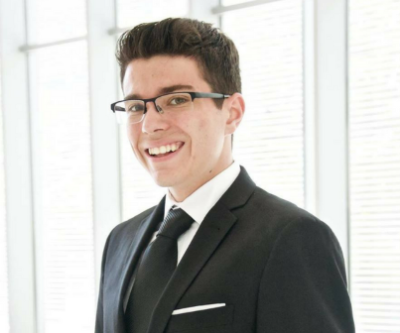 Andre Bertram is the CEO and Co-Founder of HelpWear Inc. As a young entrepreneur, Andre uses his background in science and systems engineering in tackling the issue of cardiovascular illness globally.