

It was almost two years ago, early in Dr. Klaudia Nowak’s medical career, that she received an urgent call in the middle of the night.
With a patient on the operating table and the surgeons standing by, she had 30 minutes to diagnose a sample of human brain tissue. Her conclusions could alter the course of brain surgery.
“Needless to say, I was quite nervous,” Dr. Nowak, a gastrointestinal pathologist at UHN, says of the diagnosis, which was made more difficult because the sample was frozen and distorted.
However, thanks to digital pathology, the biopsy was scanned and converted into a virtual image. Dr. Nowak sent it to a neuropathology colleague, the pair viewed it in real-time, and their diagnosis led the neurosurgery team to stop the procedure before it started.
This is just one example of the many ways digital pathology has revolutionized patient care at UHN.
Now, UHN, the first multi-centre hospital in Canada to fully adopt digital pathology, is expanding it to 29 partner hospitals in Northern Ontario – giving these communities equitable access to enhanced laboratory
medicine services.
“Digital pathology is bringing us to places we could have never even imagined five years ago,” says Dr. George Yousef, Medical Director of the Laboratory Medicine Program at UHN.
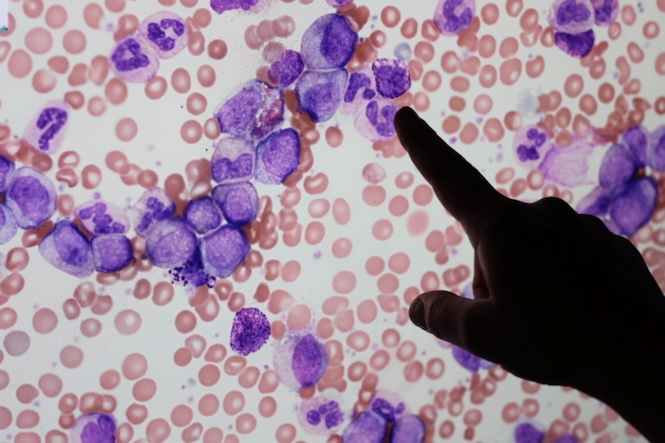
Pathologists, the doctors who diagnose cancers and infectious diseases, have traditionally done so by examining a biopsy on a glass slide under a microscope. In digital pathology, glass slides are converted into virtual images on a computer screen, allowing for faster, more precise diagnoses while eliminating the manual work of a microscope.
Converting glass slides into virtual images allows for faster, more precise diagnoses. Now, 29 Northern Ontario hospitals are getting access to these services.
In the past, if a general pathologist needed a second opinion from a specialist they didn’t have, the glass slide would have to be shipped in the mail to the appropriate hospital for analysis. This process could take weeks, with the possibility of the slides breaking with the biopsy in it, posing serious safety risks.
Now, Dr. Yousef says, the flexibility of digital pathology can bypass geographic barriers around the world, speeding up consultation and diagnosis from weeks to days, days to hours, or even hours to minutes.
Bringing the infrastructure for digital pathology to Timmins Cluster Lab Services Program, Kenora Rainy River Regional Laboratory Program and the Sault Area Hospital – an initiative called “We The North” –will give more remote communities access to UHN’s specialized pathologists, which acts as an effective solution to the understaffing challenges particularly prominent in these areas.
Northern expansion will not only enable faster diagnoses, but better metrics and data for communities that have been historically underrepresented in medical research.
The Lake of the Woods Hospital in Kenora recently began stocking new medications in their pharmacy to treat diseases that are common in the community – something Dr. Nowak says is a direct result of the high-quality, detailed pathology reports from UHN’s Laboratory Medicine Program.
“It’s amazing how we can collaborate with our northern partner sites to bring about change in the manner patients are treated,” says Dr. Nowak, who serves as the Anatomical Pathology Director for the Kenora Rainy River Regional Laboratory Program.
Artificial intelligence (AI) also plays a key role in digital pathology, making diagnoses faster and more precise than the human eye.
“We can now use AI to significantly improve our capabilities and take patient care to the next level, something we call precision medicine,” Dr. Yousef says.
AI can help identify specific genetic disease patterns in biopsies and eventually develop algorithms to predict the best course of treatment for the patient based on their condition, he says.
Dr. Yousef adds that having access to digital files of human biopsies allows for the full engagement of a multidisciplinary team in a patient’s treatment plan, which wasn’t previously possible in pathology. Now that everything is electronic, he says, oncologists, pathologists and surgeons can sit down together and have a complete view of everything related to the patient.
“It truly is a new era of pathology – a holistic approach to patient care,” Dr. Yousef says.
For Dr. Rumina Musani, digital pathology is more than just teamwork. For her patients, it can make the difference in a life and death situation.
“The ability for technologists to communicate immediately with pathologists can save lives as far as leukemia goes,” says Dr. Musani, a pathologist specializing in hematology at UHN.
One of the most urgent diagnoses hematologic pathologists face is called acute promyelocytic leukemia. A patient may be hemorrhaging all over their body and can die if they don’t start treatment immediately.
Dr. Musani remembers being a young pathologist on call and having to physically go into the hospital in the middle of the night to make that and other urgent diagnoses, trips that wasted valuable time. She adds that biopsies or blood smears aren’t always easy to read and often don’t present how they do in the textbooks.
“Not being able to access second opinions back then were very scary, high-pressure situations,” she says.
Now, being able to get a high quality second opinion in urgent cases is not only critical for safety of the patient, but for the development of a young pathologist, she says.
“Being able to consult your colleagues builds confidence,” says Dr. Musani. “Being alone creates fear.”
She adds it’s a big step for hospitals in Northern Ontario, who didn’t previously have access to specialized hematology pathologists.
“It’s really a good feeling when you’re able to find something that was missed, but to know you also helped save a patient’s life,” she says.
UHN is looking ahead to even bigger collaboration and recently signed with the Mayo Clinic to expand digital pathology into the United States. The next step is expansion in Israel and Brazil.
However, Dr. Yousef says digital pathology is a very expensive innovation that needs philanthropy to keep moving forward.
“We’re leading the way in Canada at UHN, but the idea is to create a global hub for digital pathology,” he says.
“International collaboration will help build the case.”
By Shauna Mazenes
Shauna Mazenes works in communications at University Health Network.